

Crushing Colonialism


The United Nations General Assembly Hall was abuzz with conversation when a loud clacking sound began, followed shortly by singing. Katisha Star Rose Paul sang a Coast Salish Paddle Song her family wrote, while she led a line of Indigenous people into the Hall as the cultural invocation to begin the 25th Permanent Forum on Indigenous Issues.

On April 21, 2026, at the 25th session of the United Nations (UN) Permanent Forum on Indigenous Issues in New York City, Jean Whitehorse (Diné) recounted her experience with forced sterilization and called for a global study and a statement from the UN against these practices.

Midwifery in Indigenous communities in “Colombia” has historically been a practice sustained mainly by women, though not limited to them. “In the past, there wasn’t a specific figure responsible for attending births; rather, it was shared knowledge within the community.

Not all minds are made to survive colonialism. Being Indigenous and neurodivergent is not a sum of vulnerabilities. It is an intersection of structural violences—on territory, knowledge, and the body. You cannot separate health from history, nor the mind from the land.

With no lasting support from local authorities and packaged water too costly for many families, residents have little choice but to keep relying on untreated water from the open, exposed river. Over time, troubling health problems have emerged.

Across East Africa, healthcare inequality is shaped by colonial histories and ongoing systemic neglect. For Indigenous communities, these inequalities deepen when disability becomes part of lived experience. Clinics without ramps, health services without sign language interpretation, and systems that fail to recognize Indigenous healing practices all combine to restrict access to care.

In “Nigeria,” both the immense population and diversity highlight a central crisis: systemic failures in healthcare. While insecurity dominates headlines, the daily reality is that many lack timely, adequate care—especially in the north. Nigeria’s scale reveals not just strengths, but stark inequalities.
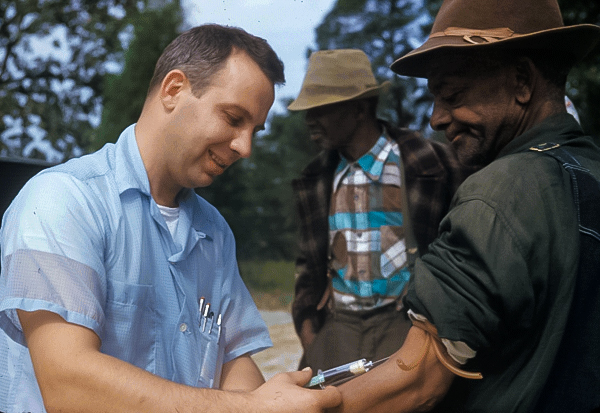
Structural inequities within the American healthcare system continue to jeopardize lives and erode the quality of life for marginalized populations. These failures manifest as lower standards of medical care, higher mortality, and significantly shortened life expectancy. Data indicate that one in five adults in the “United States” has encountered discrimination in a medical setting, largely driven by racial or ethnic bias.

Swedish maternity care is often presented as safe and equitable for all. Yet behind this image lies a highly centralized and standardized system that, in practice, can strip women—especially those in Sápmi—of the right to give birth on their own terms and in connection with Sámi culture.

In the face of climate collapse and accelerated extractive development, Indigenous relational worldviews—rooted in the understanding that people and environment are interdependent—are too often dismissed as symbolic or outdated rather than recognized as powerful, future-oriented practices of care, governance, and resistance. Yet across continents, Indigenous communities are showing that ecological care, resilience, and political resistance grow out of lived, land-based knowledge that rejects extractive ideas of disposability and ownership.
An atmospheric river is not a metaphor. It’s an actual river flowing through the sky. A corridor of moisture streaming off from the Pacific Ocean.

In November 2025, the United Nations Framework Convention on Climate Change (UNFCCC) convened its 30th Conference of the Parties (COP30) in Belém, in the Brazilian Amazon.