

The Magazine
Green Transition, Red Realities: How Communities in the Congo Basin Are Resisting the Green Rush
- By: Joseph Tsongo
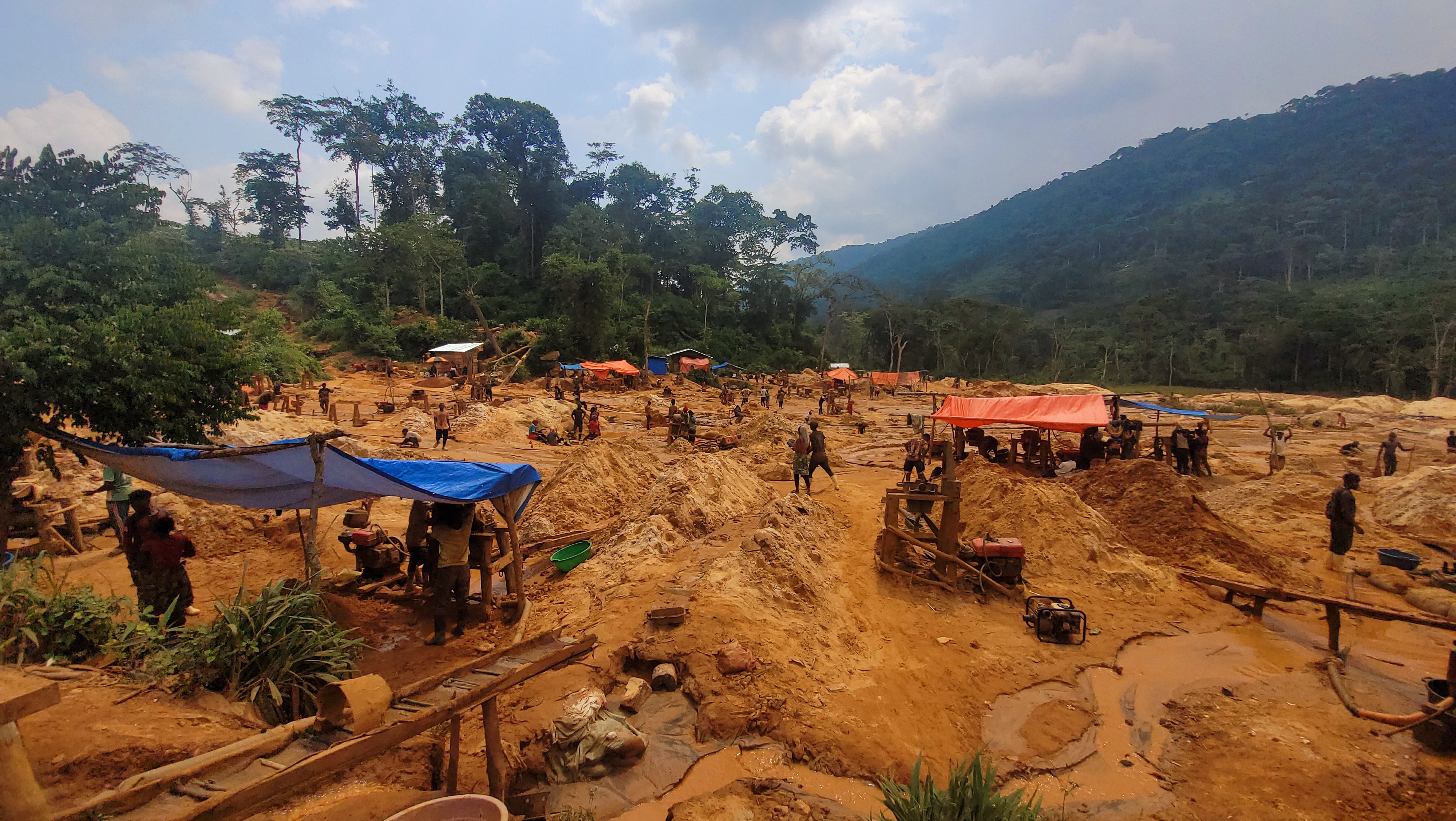
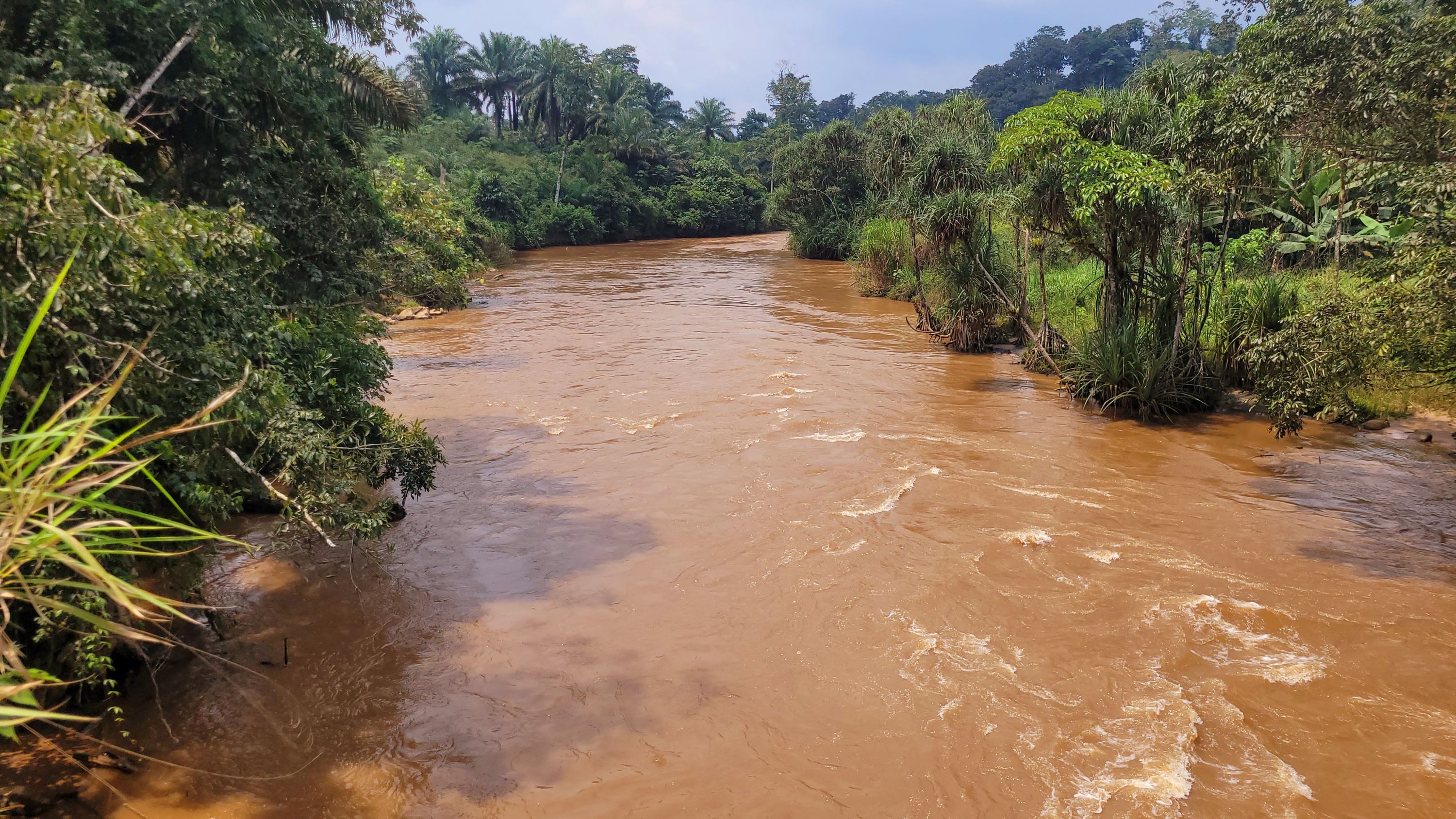
“We don’t know what to eat anymore,” said Mr. Lifoli Fiacre, an elderly fisherman from Basoko, in the Tshopo province of the Democratic Republic of Congo, his voice trembling. For decades, the Aruwini River fed his family, irrigated their fields, and provided the fish that ensured their survival. Today, his nets come up empty. The water has changed color. The fish are disappearing, or when caught, they rot in just a few hours.
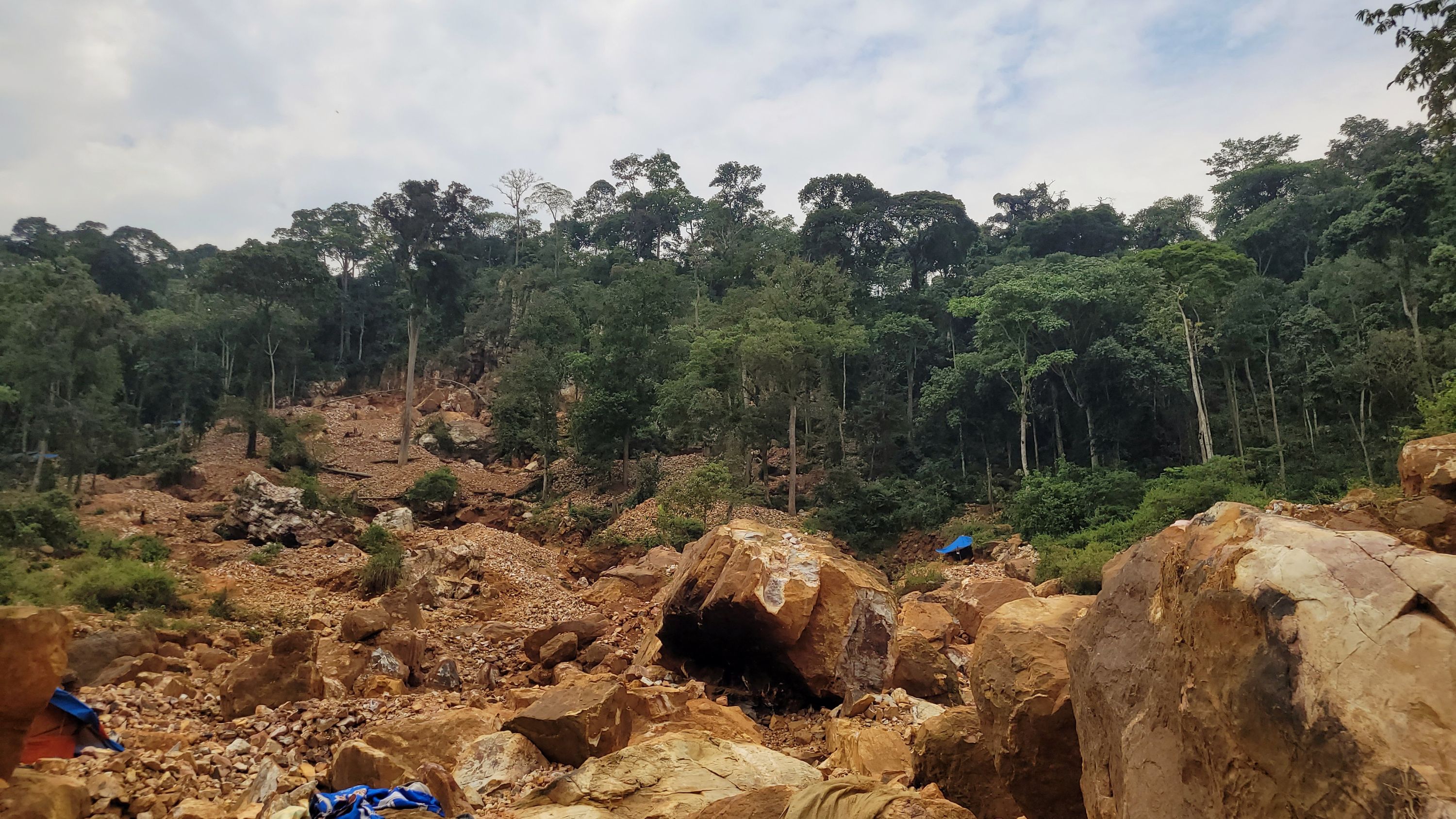
“And no one is listening to us,” he whispers, his gaze lost on the forest horizon that is gradually being eaten away by bulldozers. His story is not an isolated one. It resonates like a painful echo throughout the Congo Basin, where millions of local and Indigenous communities are now paying the hidden price of a “green transition” that is turning, before their very eyes, into a new form of colonial extractivism.
The Paradox of the “Solution Country”
In October 2022, during the pre-COP27 conference held in Kinshasa, the Democratic Republic of Congo proclaimed itself the “solution country” for the planet in the face of the climate crisis. With its vast forests, water resources, and strategic minerals for green technologies, the country is positioning itself as a key player in the global effort to address climate change.
But behind this flattering image of a “solution country” lies a cruel paradox: despite being central to the planet’s environmental stability, the DRC remains highly vulnerable to extractive projects that degrade and destroy its ecosystems. In 2024, the country lost approximately 590,000 hectares of primary tropical forest to extractivism, an increase of 60,000 hectares compared to 2023, making it the third most affected country in the world by deforestation, according to the World Resources Institute.
This massive destruction is no accident. It is the direct result of political leaders promoting extractive projects—oil exploitation, mining, industrial logging, and hydroelectric megadams—that devastate the environment. Marketed as “engines of development,” these projects are sold on promises of jobs, infrastructure, and prosperity. In reality, they leave behind polluted land, poisoned rivers, displaced communities, and the erosion of ancestral ways of life.
When Exploitation Ravages the Land and Poisons the Rivers
In Basoko, a territory located on the banks of the Aruwimi River in the northeast of the Democratic Republic of Congo in the province of Tshopo, logging and mining companies such as FODECO, PHC, SODEFOR, and XengJeng Mining have been conducting intensive exploitation operations for several years. The testimonies collected by Jambo Radio—a community and Indigenous multimedia outlet founded in 2023 to amplify local voices—paint a damning picture.
“Our fields are being destroyed without compensation, and the land no longer produces as it once did. The fruit trees that have fed our families for generations are being cut down. Young people were promised jobs, and we were promised schools, hospitals, and roads, but almost nothing has been done in all these years. Just misery. The few roads they have tried to rebuild are primarily for the passage of their vehicles,” said Ms. Moyingo Darlose, a local farmer.
The rivers and lakes that were once crystal clear (such as the Aruwini River and Lakes Albert and Edward) are now contaminated by fuel and chemical spills. Fish stocks are collapsing. “We used to be able to easily catch enough fish to feed our families. Now, fish are scarce. And when we do catch a few, they rot quickly. We’re afraid to eat them,” said Mr. Lifoli Fiacre.
In Mege and Bandai, two villages in the province of Ituri, northeast of the country and next to Tshopo, the reality is even more brutal. In October 2021, bulldozers escorted by the army razed more than 2,500 homes to allow for the expansion of Kibali Goldmines, Africa’s largest gold mine.
The inhabitants were evicted with minimal compensation: USD 500 and a few sheets of corrugated iron. “How can we rebuild our lives with that? And what about intimidating those who dare to denounce these abuses by defending the rights of these communities?” asks a Mbuti Indigenous woman and mother who has already been arrested for speaking out about what is happening here. A report by the international organization PAX documented violations of the Congolese Mining Code—designed to limit the environmental impacts of extractive activities—and raised concerns about the role of security forces in human rights abuses associated with extractive operations.
For the Mbuti and Twa people, the destruction is both environmental and existential. The forest that fed, protected, and inspired them is disappearing a little more every day. With it, an invaluable heritage is vanishing, including ancestral knowledge of medicinal plants, spiritual practices linked to sacred sites, and social organization based on harmony with nature.
Yet Congolese laws, including the revised Mining Code of 2018, the Environmental Protection Law of 2011, and the country’s international commitments, require the protection of these lands, these forests, and these lives. But on the ground, corruption and impunity reign. The voices of communities are systematically silenced.
Lakes Albert and Edward versus Oil: a Historic Lawsuit
Deep in the eastern part of the country, along Lakes Albert and Edward on the Ugandan-Congolese border, another environmental tragedy is also unfolding—one that starkly illustrates how the so-called “energy transition” is being pursued at the expense of millions of lives.
In September 2025, as they had done every morning for generations, Congolese fishermen cast their nets into waters that sustain more than two million people. That morning, something was wrong: the nets came back empty.
Josué Kambasu Katsuva Mukura, president of the Lake Edward fishermen’s committee, said: “We are seeing some species of fish gradually disappearing. We don’t understand what is happening, but we know that something is killing our lakes.”
Some 200 kilometers to the north of Lake Edward, Modestine Raciwu, a mother who has worked in the fishing industry for decades, made the same alarming observation. “Before, I could easily buy fish to feed my family and sell at the market. Now, fish are becoming increasingly scarce and expensive. How are we going to survive without a means of subsistence?”
The answer to this disaster lies a few kilometers from the Ugandan shore, where two gigantic oil projects, Tilenga and Kingfisher, are being operated by Total Energies and the China National Offshore Oil Corporation (CNOOC).
On October 2, 2025, the scientific organization Environmental Law Alliance Worldwide (ELAW) published an explosive report documenting how these projects cause lake eutrophication: a gradual suffocation caused by the proliferation of toxic algae resulting from chemical discharges. In simple terms, oil activities are slowly poisoning the water. Fish are dying, and communities are dying with them.
While Uganda was building these offshore oil projects just miles from the Congolese border, the Congolese communities were left in the dark. There was no outreach to Congolese communities and no cross-border social or environmental impact assessments conducted. Congolese authorities did not implement measures to engage or inform affected populations.
October 27, 2025, marked a stunning turn of events. Two ordinary Congolese fishermen, Uweci Wele Moïse from Lake Albert and Josué Kambasu Katsuva Mukura from Lake Edward, accompanied by the local organization Congolese Alert for the Environment and Human Rights (ACEDH), filed the first cross-border climate dispute in East Africa before the East African Community Court of Justice in Arusha, Tanzania.
They sued Uganda for cross-border pollution, the Democratic Republic of Congo for abandoning its citizens, and the East African Community Secretariat for inaction. Their demands are simple but powerful: an immediate halt to polluting activities, a cross-border impact assessment that includes Congolese community members, and full compensation for damages according to the “polluter pays” principle.
The Green Rush: When Carbon Takes Over Forests
But extractivism is no longer limited to tangible resources. It now extends to “ecosystem services” themselves, particularly through voluntary carbon credit markets presented as a “win-win solution” for financing conservation.
A recent report by Rainforest Foundation UK, “The great green rush: the exponential rise and social impacts of forest carbon offset projects in the DRC,” which analyzed the situation of carbon projects in the Democratic Republic of Congo, exposes the dark side of this “green rush.” The report identifies 71 forest carbon offset projects throughout the country, covering a total area of approximately 103 million hectares, or nearly half of the country’s territory. These projects include registered or ongoing initiatives, but not all of them have obtained valid certification or effectively sold carbon credits on the international market. In addition to these geolocated projects, the report notes that agreements covering more than 80 million hectares have been signed between public authorities and private companies without clear geographic location or sufficient oversight, opening the door to overlaps and broad control of forests on paper.
As a result, the sector remains largely opaque. According to Rainforest Foundation UK, the national registry—the official database meant to list and document carbon projects, including their location, developers, land rights, and carbon certificates—is incomplete. Published only in late 2024, it does not include all projects and often lacks essential information, making it difficult to track who controls these initiatives and how they operate.
Only three projects are known to have sold carbon credits internationally. Many others are linked to forest concessions—areas of land allocated by the state to companies, NGOs, or project developers to carry out carbon or conservation activities. In many cases, these concessions are controlled by former logging companies that have shifted into carbon forestry, often on forests that were already exploited. This raises serious questions about the true ecological value of these projects and whether they deliver real environmental benefits.
Numerous irregularities have been documented, including illegal allocations, lack of consultation, and violations of the Forest Code. For local communities, the promises of economic and environmental benefits remain largely illusory. The right to Free, Prior, and Informed Consent (FPIC) is regularly violated. Enacted in particular by the United Nations Declaration on the Rights of Indigenous Peoples, adopted by the UN in 2007, the principle of Free, Prior, and Informed Consent requires states and companies to obtain the prior consent of the communities concerned to protect their lands, rights, and ways of life before any project that may affect them.
Maître Olivier Ndoole, environmental lawyer and executive director of the local organization ACEDH, explains that the FPIC principle guarantees that communities can accept or reject projects affecting their lands. “But in practice, consultations are often empty formalities. Women and young people are excluded. Information is incomplete or manipulated. And when communities say no, it is ignored,” he added.
In the DRC, as in other parts of Africa, these projects have fueled land tensions and flamed deep-rooted conflicts while lining the pockets of the elite (companies & government), often without delivering tangible climate or development benefits. They have also constrained community forestry by limiting access to collective land titles, which are essential for autonomous land management and self-determination.
Towards a Truly Just Transition, Putting Local Voices at the Center
To prevent the “green” transition from becoming a “red” one—marked by blood, suffering, and injustice—movements for resistance and accountability are beginning to emerge. The climate dispute involving fishermen from Lakes Albert and Edward—Case No. 47 of 2025 before the East African Court of Justice, brought against the Democratic Republic of the Congo, Uganda, and the East African Community—could establish an important legal precedent for cross-border environmental responsibility in Africa. In the face of exclusion, Silenced communities are choosing to remain silent no more. Community media, campaigns such as Notre Terre Sans Pétrole, and alliances with international NGOs are creating spaces for resistance and renewed possibilities. The Congo Basin is not only a global ecological treasure; it is, above all, a place people call home.
 Donate
About the Author
Joseph Tsongo is a Congolese storyteller and community journalist based in the Democratic Republic of Congo, where he has been covering environmental and climate issues for over five years. He is also the co-founder of Jambo Radio, a community and indigenous multimedia outlet established in the Congo Basin in 2023.