

The Magazine
The Legacy of France’s Nuclear Tests in Algeria
- By: Ziane Guedim
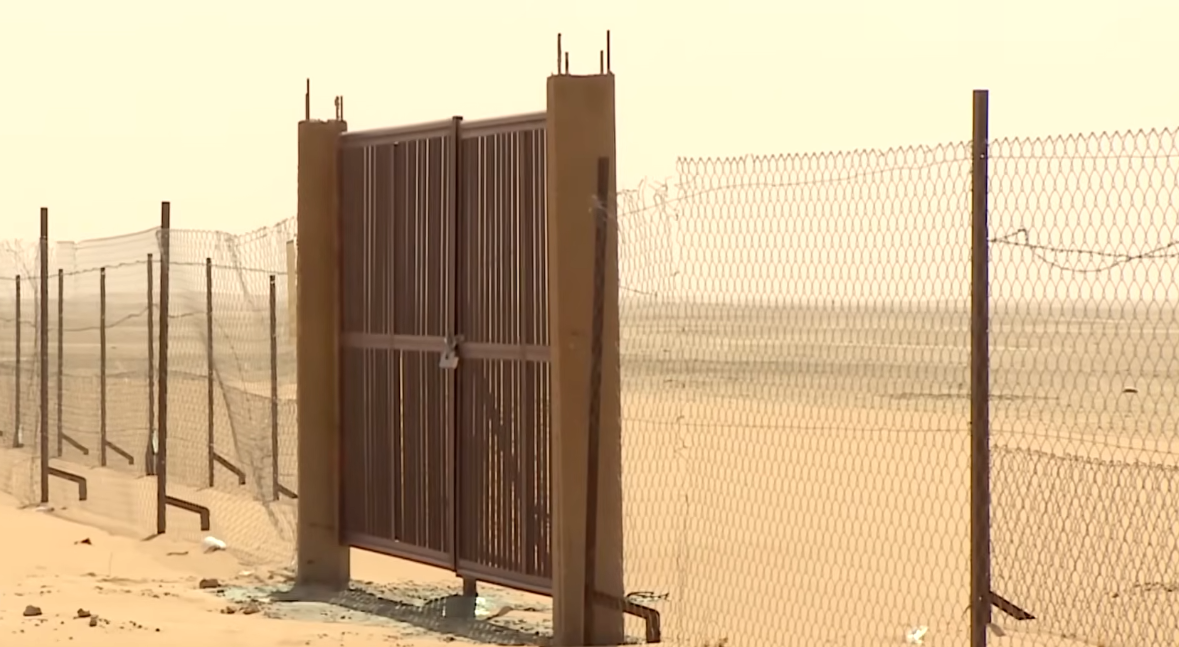
The morning of February 13, 1960, began in stillness in Reggane, 900 miles southwest of Algiers, deep in the Algerian Sahara. Windless, indifferent, almost serene, the desert stretched flat and endless around the site. Then, at 7:04 a.m., the sky split open. A blinding flash tore through the horizon—a fireball swelling hundreds of meters wide, followed by a thunderclap that swallowed the desert’s silence. A shockwave raced outward, rippling across sand, stone, and human bodies.
In a matter of seconds, the Sahara—once a colonial outpost—was transformed into a nuclear frontier. France had just detonated its first atomic bomb, known as Gerboise Bleue (Blue Jerboa). The blast, equivalent to 70 kilotons of TNT, was far more powerful than the bomb dropped on Hiroshima more than a decade before. A towering column of radioactive dust surged into the atmosphere, then drifted across North Africa and beyond, carried by winds that recognized no colonial borders.
For France, that morning marked its triumphant entry into the nuclear club. For the people of Reggane, it marked the start of a new, irreversible reality.
Ami Mohamed was working near the site that morning. He was hauling stones for the French military. He had not been told what was coming, nor given protective gear. When the flash erupted, he felt the ground shudder beneath his feet as the air slammed into his body like a wall. He would later recall watching the towering cloud rise—swallowing the sky—without realizing he was standing at the edge of an atomic experiment. He was not alone.
Thousands of civilians in Reggane and the surrounding areas were caught in France’s nuclear experiment. Entire communities—an estimated 42,000 people—were left directly in the path of radioactive fallout. Between 1960 and 1966, France conducted at least 17 nuclear tests in the Algerian desert—four atmospheric explosions near Reggane, followed by thirteen underground tests in the Hoggar region. These detonations, along with a series of additional experiments linked to weapons development and waste management, left a deep and lasting imprint on the Sahara.
More than scientific experiments or Cold War posturing, France’s nuclear tests in Algeria were a form of colonial risk externalization: the deliberate transfer of existential danger onto a colonized land and its people. The colonial administration exported the catastrophic potential of its nuclear program far from its own population, offloading the risks of fallout and long-term contamination onto a colony deemed expendable.
The consequences—cancers, birth defects, poisoned ecosystems—became a lasting toxic legacy, persisting long after colonial rule had ended. The tests embodied the core logic of the colonial empire: land and lives were appropriated to secure power. France accrued prestige, deterrence, and geopolitical leverage, while the risks—contamination, illness, and displacement—were borne by its colonial subjects. Algerian territory, and later French Polynesia, became the proving ground.
“I had prayed the dawn prayer and remained seated when the bomb exploded and lit up the entire room,” recalls an elderly survivor, his testimony preserved by the International Committee of the Red Cross. “People began praying and supplicating to God, thinking it was the end of the world. Then came a tempestuous wind that killed people and livestock. I lost 25 camels that year.”
Decades after the last test conducted in 1966, the environmental damage remains deeply embedded in the landscape. Radioactive debris was left scattered across the desert, as French authorities buried contaminated metal, equipment, and vehicles used during the tests. Contaminated materials—including metal and sand—were reportedly reused in homes, fences, and tools. Contamination of soil and water forced herders to avoid ancestral grazing routes. Radioactive debris contaminated grazing lands and water sources. Livestock died after exposure, and herders were forced to avoid or abandon traditional routes, disrupting nomadic patterns and leading some settlements to be deserted.
In a landscape where mobility is survival, contamination altered centuries-old patterns of life, quietly reshaping desert ecologies and human geographies alike.
The ecological consequences were not confined to the blast sites. The atmospheric detonations fused desert sand into radioactive glass and spread toxic contamination across wide areas of the Sahara. Subsequent underground tests fractured granite mountains, releasing contaminated rubble and radioactive gases. Radioactive material seeped into soil layers, contaminating desert wells and aquifers that sustained local populations and oases. In an arid environment where water sources are scarce, the contamination of wells reshaped patterns of settlement, migration, and survival.
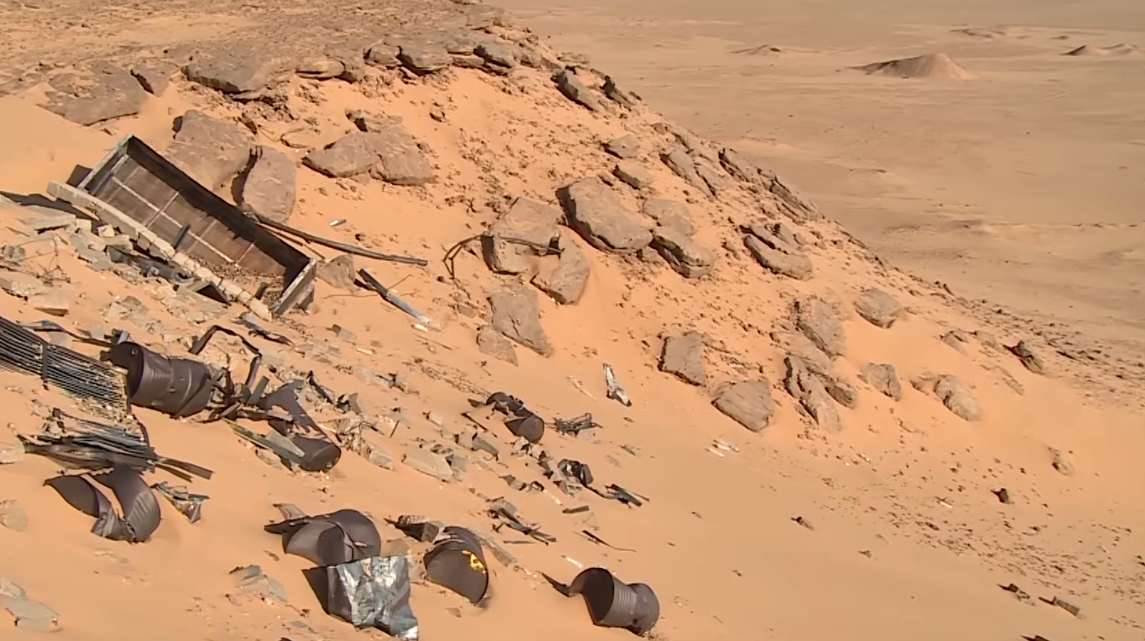
Large tracts of land were rendered hazardous for grazing and habitation, forcing families to abandon ancestral camps or relocate entirely. Even decades later, international agencies and researchers have detected elevated radioactivity in the test zones. For Indigenous communities, environmental destruction was inseparable from cultural loss: their land that carried identity, memory, and subsistence became a landscape of uncertainty and danger.
These environmental harms have had lasting consequences for human health as well. The Sahara, often imagined as empty, was in fact a densely inhabited ecosystem. Despite French colonial claims that had depicted it as a blank space on the imperial map, framing it as a barren, uninhabited expanse fit for sacrifice. Residents of Reggane and the Hoggar region—Tuareg pastoralist communities, Arab nomadic groups, and other oasis populations—continue to report elevated rates of reproductive complications, cancers, and other chronic illnesses as recently as the 2020s. Regional reporting and surveys of veterans exposed to fallout have found disease patterns that appear higher than typical national baselines.
For example, surveys of French test site veterans found about 35 % had one or more types of cancer and roughly 20 % reported infertility, rates that far exceed what would be expected in a comparable non‑exposed group.
Physicians and researchers have documented cases of childhood leukemia, thyroid disorders, and congenital malformations in communities near Reggane and In Ekker. Local clinicians and advocacy groups report rates of cancer and reproductive complications that appear higher than national averages, particularly for thyroid cancers and hematological malignancies, which are known to be radiation-sensitive. However, the absence of systematic epidemiological surveillance in the region before and after the tests, combined with limited access to medical records, makes precise quantification difficult. For many families, illness arrived without explanation, diagnosis, or compensation, leaving patterns of disease to be tracked through testimony rather than comprehensive public health data.
The desert was further impacted by ancillary nuclear activities conducted during the 1960–1966 testing period, including dispersal trials and waste-related explosions. As a result, radioactive contamination became embedded in the Sahara itself—its soil, rocks, and hidden hotspots—turning the desert into a long-term repository of nuclear waste and unresolved harm.
The scale of the contamination became fully apparent only decades later, when France partially declassified fallout maps in 2013. The documents revealed radioactive particles spreading far beyond Algeria’s borders. “This map shows that twenty-six African countries were contaminated by this explosion,” said nuclear physicist Ammar Mansouri. “This is a major crime, not a local one, but a continental crime.”
Compiled by the French military in the weeks following the first detonation in Reggane, the map tracked radioactive dispersion day by day. They showed fallout plumes extending far beyond the officially acknowledged zones, sweeping across much of North and West Africa, reaching the Sahel, Central Africa, and the Atlantic coast. Subsequent reporting and archival research suggested that radioactive particles also crossed the Mediterranean. Traces were detected in southern Spain, Italy, and the Mediterranean islands. The maps did not quantify health or ecological damage; instead, they documented what France had long concealed: that the blast was never a local event.
But what would justice look like six decades later? No cleanup, reparation, or apology can fully undo the damage already done. The land remains scarred, bodies carry the legacy of exposure, and entire generations continue to live under a shadow that no compensation can completely erase.
 Donate
About the Author
Ziane “Zed” Guedim is an Algerian writer and journalist whose work spans fiction and nonfiction. Fluent in Arabic, French, and English, he explores stories at the intersection of history, culture, and social justice. His fiction has been published in international journals and anthologies.