

The Magazine
Voices of Change: Nataanii Means on Hip Hop, Resistance, and Reclaiming Power
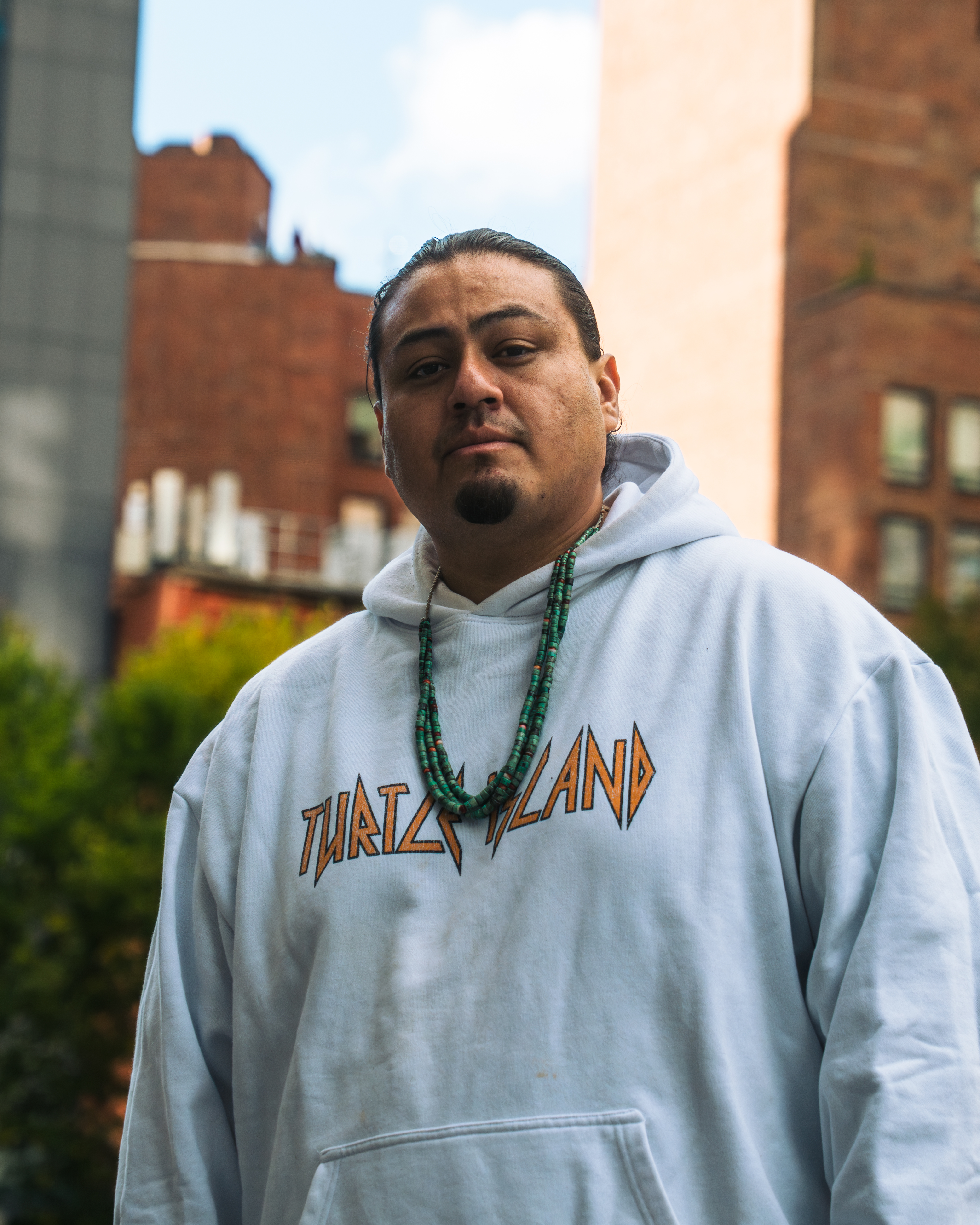
As part of The Magazine’s Changemakers issue, Diné, Omaha, and Oglala Lakota rapper and activist Nataanii Means shares how hip hop has become a force for transformation—challenging colonial legacies, rebuilding community, and inspiring a new generation to rise with purpose.
Q. Can you first walk me through what it means to you to be a changemaker, and why you think hip-hop music and the work that you do are promoting change-making?
It’s a sobering statement to make about the music that I make. It makes me step back and reflect on the impact music can have and how far it can reach. Just yesterday, I was speaking in my own community on the Navajo Nation, and it really made me see how far I’ve come, from growing up on the reservation and starting out making music at my high school, to now being able to travel the world and represent my people on a global stage. It’s an honor to be called a changemaker. Music is universal; it not only helps our people express themselves, but also reaches listeners across the world. It’s a beautiful thing.
Q. How do you translate your activism, values, and ideas about resistance and resilience into your music, while also making sure your message isn’t misunderstood? In other words, how do you find that balance between expression and clarity in what you create?
For me, it’s about being authentically me. I don’t even like to say I’m an activist, because we grow up in a system that forces you to think about what true freedom is.
So, being able to talk about that in my music isn’t me forcing activism. It’s bringing back an old sense of pride. It’s reminding my people and myself that we’re not American. And I think John Trudell said it best: we’re not Indian, we’re not Native American—we’re older than both concepts. When I introduce myself in my Navajo language, we never once mention being American or citizens of the United States. We mention clans that are older than this country, clans that go back thousands of years. I’m just trying to remind everyone that we’re still here.
As for being a changemaker, maybe, in that sense, I am. Not through activism exactly, but by reminding people who we are and how strong we are, by highlighting the characteristics that have been forgotten for centuries because of colonization and mainstream culture. I guess you could say that makes me a changemaker. So, what I’m trying to portray in my music, or whenever I speak, or even in activism, is to remind people that we come from the earth. So it’s just reminding people of who we are as human beings in relationship to nature. That’s the concept of our way of life as traditional people who still have our ceremonies, who still have our language. It’s almost like I’m a changemaker, but I’m also reminding people—bringing people back to the essence of what it means to be a human being.

Q. How is it for you to see this new generation coming into the world, navigating the tension between keeping traditions, staying rooted in them, and the craziness of the contemporary world trying to pull you away from that?
I look at using hip hop as a way to help a lot of my own people understand that culture as well, and to merge cultures together. We’re still blending cultures; we’re still blending this thing called hip hop together. When I go back to where I’m from or to other reservations and show videos of the places I’ve been, the places I perform, or the music I make—and I’m talking in a fun or poetic way, proud to be from where I’m from, talking about chiefs or old chiefs or Native pride—that right there plants little seeds in the younger generation.
When I was young and saw Native rappers perform on stage, I didn’t think that was possible. I saw a rapper once—his name was Keith IMC—I was 16 years old, and he remixed the song “Country Roads Take Me Home.” He said, “Native America, take me home.” For some reason, that gave me such a sense of pride and made me feel seen. For him to do that on stage was phenomenal to me.
I know these young people from where I come from can see me, and if I can just plant a little seed in them to take pride in who they are or pursue a career in the arts—any kind of art—that’s a win right there.
Q. And amid all your work—your creativity, your music, using hip hop as a way to remind people where they come from—in the midst of all the chaos and challenges, what gives you hope?
I want my people to experience sharing who we are in a healthy way. I’m hopeful that I can continue doing this—continue shedding light on powerful issues—but also that kids on the rez can see me, feel proud of who they are, and want to live. It’s hard to come from where we come from. It’s hard to see light at the end of the tunnel when you grow up on the reservation. That’s how the American government wanted it—to surround us with impossible avenues out, to make Native people dependent on the system. And now, you can see the same thing happening to the American people—they’re becoming the new American Indians, dependent on the government. You see it in what’s happening in the world. So, I’m just hopeful that my music can help people think freely.

Q. Do you feel a sense of responsibility in your work—not just knowing that your music can help someone, as you mentioned, but also carrying that awareness and intention as part of what you do?
Yeah, I think we all should feel a sense of responsibility, especially with the way we’re taught in traditional societies—that once you’re able to speak, your words are sacred and powerful. So, even just speaking something into existence, you need to watch what you say. Learning about our traditional values in all of my nations holds me to a responsibility for what I do as a Lakota man, as a Diné man, as an Omaha man. I’m very conscious of how I carry myself, and I think everybody should feel like that. You, as a person, are very powerful. Nobody’s just nobody—we all carry power. Some people lose sight of that, and some people are never aware of it. So yeah, I definitely feel that. That was a good question. Thank you.
Q. What does that idea mean to you, personally and through your art? How do you think hip hop can help crush colonialism or contribute to decolonizing people—so that we can live in a safer, more peaceful world, both within ourselves and in our communities?
To me, crushing colonialism—there are so many aspects to it, not just in the musical sense. Music in itself—and hip hop—can be seen as one of the most capitalistic, egotistical-driven genres sometimes, and it’s true. You do have to—like a lot of artists—you have to be selfish out here if you want to be successful. You do have to—like a lot of artists—you have to be selfish out here if you want to be successful. A lot of them are so selfish, the most successful ones, and they’re all about themselves.
So, for me, when you ask me what crushing colonialism is, it’s putting power back into the community. Because when you have a community, you don’t need to rely on a central governing power. And that’s what scares politicians. That’s what scares the federal government: when people can be truly liberated from needing them. They rely on the people; they rely on us for their power, their money, their policies. But when we don’t rely on them and instead rely on each other, that’s where crushing colonialism is at its most powerful. It’s putting faith back into each other as human beings.
This interview has been edited and condensed for clarity and length.
