

The Magazine
Lula’s Victory in “Brazil” Brings Hope for Indigenous Land Rights, but Amazon Extraction Projects Remain a Concern
- By: Robson Delgado
Luiz Inácio Lula da Silva’s reelection as “Brazil’s” president marks a decisive moment for the future of Indigenous rights, territorial protection, and environmental policy in the Amazon. In a closely contested race against Flávio Bolsonaro of the Liberal Party (PL), the Workers’ Party (PT) candidate, better known as Lula, secured 51.79% of the valid votes, according to results released by the Superior Electoral Court. The victory was particularly significant because Lula trailed Bolsonaro by more than 2.2 million votes in the first round on October 4. He went on to make history as the first presidential candidate since “Brazil’s” return to democracy in 1985 to finish second in the first round and win in the runoff. This victory marks Lula’s fourth presidential win, which will run until 2030.
But these results are more than a continuation of government. They also reflect voters’ choice between two political projects that differ significantly on the role of the state and on environmental protection and Indigenous rights policies.
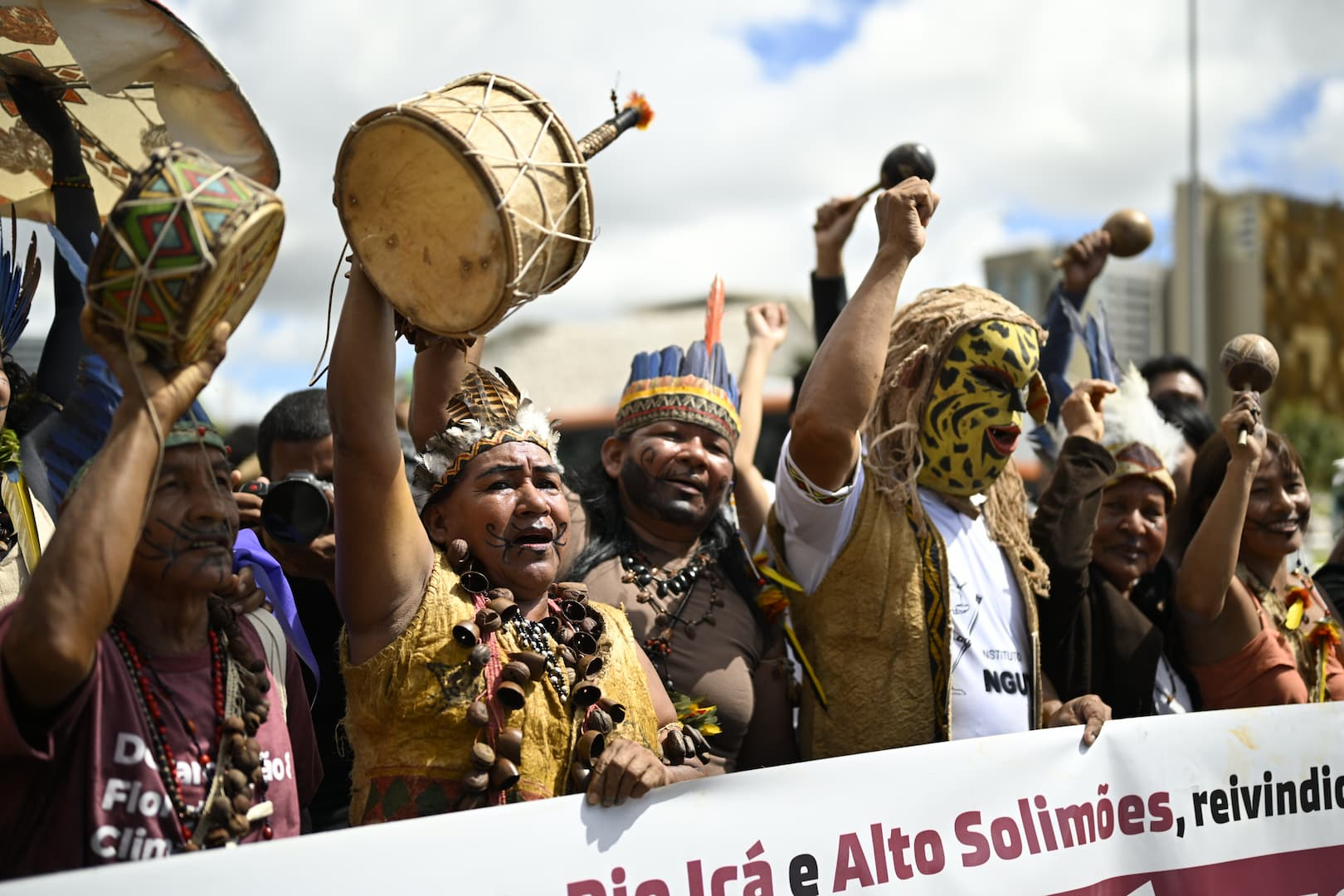
During his campaign, Lula pledged to continue land demarcation—the official recognition and legal protection of Indigenous peoples’ lands—and strengthen protections for their territorial rights and cultures. On the environment, he committed to ending net deforestation by 2030, strengthening enforcement against illegal deforestation, expanding conservation, and recognizing Indigenous and quilombola territories. He also proposed developing the Amazon’s bioeconomy, creating sustainable economic opportunities based on forest resources rather than large-scale extraction projects.
Bolsonaro proposed giving Indigenous peoples greater freedom to decide how to use their territories for economic activities, including farming, cattle ranching, mining, and tourism, compensating Indigenous communities for land-use restrictions and revising environmental regulations to reduce what the campaign described as bureaucratic obstacles to economic development. However, these proposals raise questions about how authorities would regulate these activities and whether they would safeguard Indigenous peoples’ collective territorial rights and existing environmental protections.
For Indigenous communities, the election result brings hope but also calls for caution. Lula’s victory creates opportunities to continue territorial protection policies, but it does not, by itself, guarantee that pending demarcation processes will be completed or that invasions and conflicts will be effectively addressed. “Brazil’s” new president will face the challenge of turning political commitments into tangible protection for Indigenous communities living in the Amazon and other regions of the country.
For Mariazinha Baré, a member of the Baré Indigenous People from the Cué Cué/Marabitanas Indigenous Territory and General Coordinator of the Coordination of Indigenous Organizations and Peoples of Amazonas, monitoring progress on land demarcation is essential for Indigenous peoples. “These are rights guaranteed by the Constitution. With Lula reelected, we may have a more open dialogue. This policy protects our lives and contributes to combating climate change in many ways,” she says.
Lula’s Political Trajectory and the Significance of His Fourth Term
Lula governed “Brazil” from 2003 to 2010 and returned to the presidency in 2023 after defeating Jair Bolsonaro, Flávio’s father, in the 2022 election. His political career is associated with expanding social programs, reducing poverty during different periods, and strengthening “Brazil’s” international presence.
On environmental policy, his first two administrations launched major initiatives to combat Amazon deforestation, particularly during Marina Silva’s tenure as Minister of the Environment. However, they also faced controversies involving major infrastructure projects and energy developments. Lula’s record therefore combines environmental advances with decisions that Indigenous organizations and environmental groups continue to debate.
During his third term, the government restored institutional structures dedicated to Indigenous peoples and reestablished the Ministry of Indigenous Peoples, initially led by Indigenous leader Sonia Guajajara. The measure represented a symbolic and political step forward by expanding Indigenous participation in public policymaking.
“The creation of the Ministry of Indigenous Peoples reaffirmed President Lula’s commitment to us, ensuring our autonomy and our right to make decisions about our territories, our bodies, and our ways of life,” says Toya Manchineri, a member of the Manchinerei Indigenous People and General Coordinator of the Coordination of Indigenous Organizations of the Brazilian Amazon (COIAB). “It is an important instrument that enables us, as Indigenous peoples, to ensure that public policies are effectively implemented and that our rights are upheld.”
Now, in his fourth presidential term, Lula must show that this institutional structure can deliver lasting results. But his reelection also comes amid a challenging political landscape. The 2026 Congress is strongly conservative, which may limit the government’s ability to pass certain measures. Even with presidential support for land demarcation, territorial protection will depend on political negotiations, budgetary resources, and coordination among different institutions.
Governors’ Races Will Also Shape “Brazil’s” Future
Brazilians also went to the polls on Sunday to elect their state governors. Although the federal government plays a central role in demarcating Indigenous lands, state governments also wield considerable influence over environmental licensing, economic development, law enforcement, and decisions affecting traditional communities. In Amazonas, the state with the largest population of Indigenous people in the country, these issues take on particular significance after Omar Aziz, of the Social Democratic Party (PSD), was elected governor.
Aziz’s election has once again put the state’s environmental policy and Indigenous rights in the spotlight. An ally of President Lula, Aziz advocates economic development and infrastructure projects, but his stance on mineral extraction has raised questions about the potential impacts of these initiatives on traditional territories.
One major point of contention is a potash mining project in Autazes, a municipality in Amazonas, which Aziz has backed as an opportunity to promote economic development and create jobs. However, the project affects territories traditionally occupied by the Mura people, including areas associated with the Lago do Soares Indigenous Land, raising concerns about environmental damage and the protection of Indigenous territorial rights.
The debate also focuses on prior consultation with affected communities, as required under Convention No. 169 of the International Labour Organization (ILO), a legally binding international treaty that establishes standards for protecting the rights of Indigenous and tribal peoples, including their right to self-determination. Although some Indigenous representatives support the project, Mura communities remain divided, and Indigenous organizations have raised concerns about pressure on community leaders and threats to territorial rights.
A 2025 report by the Ministry of Indigenous Peoples, Minando Direitos (“Mining Rights Away”), documents alleged human rights and territorial violations linked to large-scale potash mining. It highlights how licensing processes bypassed federal oversight and failed to ensure genuine free, prior, and informed consultation with affected communities.
Omar Aziz’s administration will face the challenge of promoting economic development while protecting Indigenous peoples’ rights and the environment. How it handles the potash project will show whether economic interests take priority over traditional communities’ rights and autonomy.
Indigenous Peoples and Threats to Their Territories
“Brazil” has a diverse Indigenous population living across the country’s regions and ecosystems. According to the 2022 Demographic Census conducted by the Brazilian Institute of Geography and Statistics (IBGE), the country has 1,694,836 Indigenous people belonging to different ethnicities, peoples, and groups.
Although “Brazil’s” Constitution recognizes Indigenous rights to their ancestral lands, many continue to face oil projects, land invasions, deforestation, illegal mining, logging, and the expansion of agricultural and livestock activities. These pressures can compromise water quality, food security, health, and the continuity of cultural practices passed down through generations.
Indigenous peoples in voluntary isolation and those with recent contact face particularly serious risks when their territories are invaded, threatening their very survival. Threats include mercury contamination of rivers, the destruction of hunting and fishing grounds, and violence linked to land conflicts.
Protecting Indigenous territories is also essential to addressing climate change. These lands play a vital role in conserving forests and biodiversity and storing carbon. Safeguarding them is therefore not only a constitutional obligation but also a key part of global efforts to combat climate change.
Oil exploration in the Foz do Amazonas Basin, part of “Brazil’s” Equatorial Margin, is a clear example of the threats Indigenous people are facing in their territories. The region is home to important ecosystems, including mangroves, and communities that depend on fishing and other natural resources found there. An oil spill could cause significant environmental damage and jeopardize traditional economic activities.
Indigenous peoples from Oiapoque, in the state of Amapá, in the country’s far north, are among the groups that have expressed concern about oil exploration projects in the region. A Reuters report published in April 2024 found that the Council of Chiefs of the Indigenous Peoples of Oiapoque represents more than 8,000 Indigenous people living in over 60 villages in Oiapoque. Indigenous representatives called for a seat at the table and participation in discussions about the project’s potential risks and consequences.
Expanding fossil fuel production also raises questions about whether “Brazil’s” energy policy is consistent with its climate commitments. For environmental policy to move forward, the Lula government must ensure that Indigenous rights are considered from the start of the decision-making process, not after projects are already underway.
“Recognizing Indigenous lands is not enough if major projects continue to encroach on our territories. The right to free, prior, and informed consent must be respected,” insists Herton Mura, an Indigenous leader of the Mura people.
A Dispute That Extends Beyond “Brazil’s” Borders
Lula’s reelection also has international implications. “Brazil” holds a strategic position in climate negotiations and biodiversity protection, and its decisions shape discussions about the future of the Amazon. The direction the country takes on these issues matters even more in a region where right-wing leaders are gaining influence and are building closer ties with Donald Trump in the “United States.”
With his reelection, Lula can continue positioning the country as a key player in climate negotiations and international cooperation. To maintain this role, however, “Brazil” must ensure that its domestic policies reflect its international climate commitments.
“The importance of the Amazon and “Brazil’s” potential in renewable energy strengthen this leadership. However, combating deforestation and meeting environmental targets will be essential,” says Marinete Tukano, a member of the Tukano people and Coordinator of the Union of Indigenous Women of the Brazilian Amazon (UMIAB). “The challenge, therefore, will be to reconcile economic development with environmental preservation.”
 Donate
About the Author
Robson Delgado Baré is an Indigenous journalist from the Baré people of São Gabriel da Cachoeira, in Amazonas, and the first Indigenous person to earn a journalism degree from the Federal University of Paraná (UFPR). Through his journalism and communications work, he amplifies Indigenous voices and raises awareness of cultural, educational, and political issues affecting Indigenous peoples, particularly in the Amazon. He currently reports on how major development projects affect Indigenous peoples and territories across the region and is a member of the Brazilian Network of Indigenous Journalists (ABRINJOR).