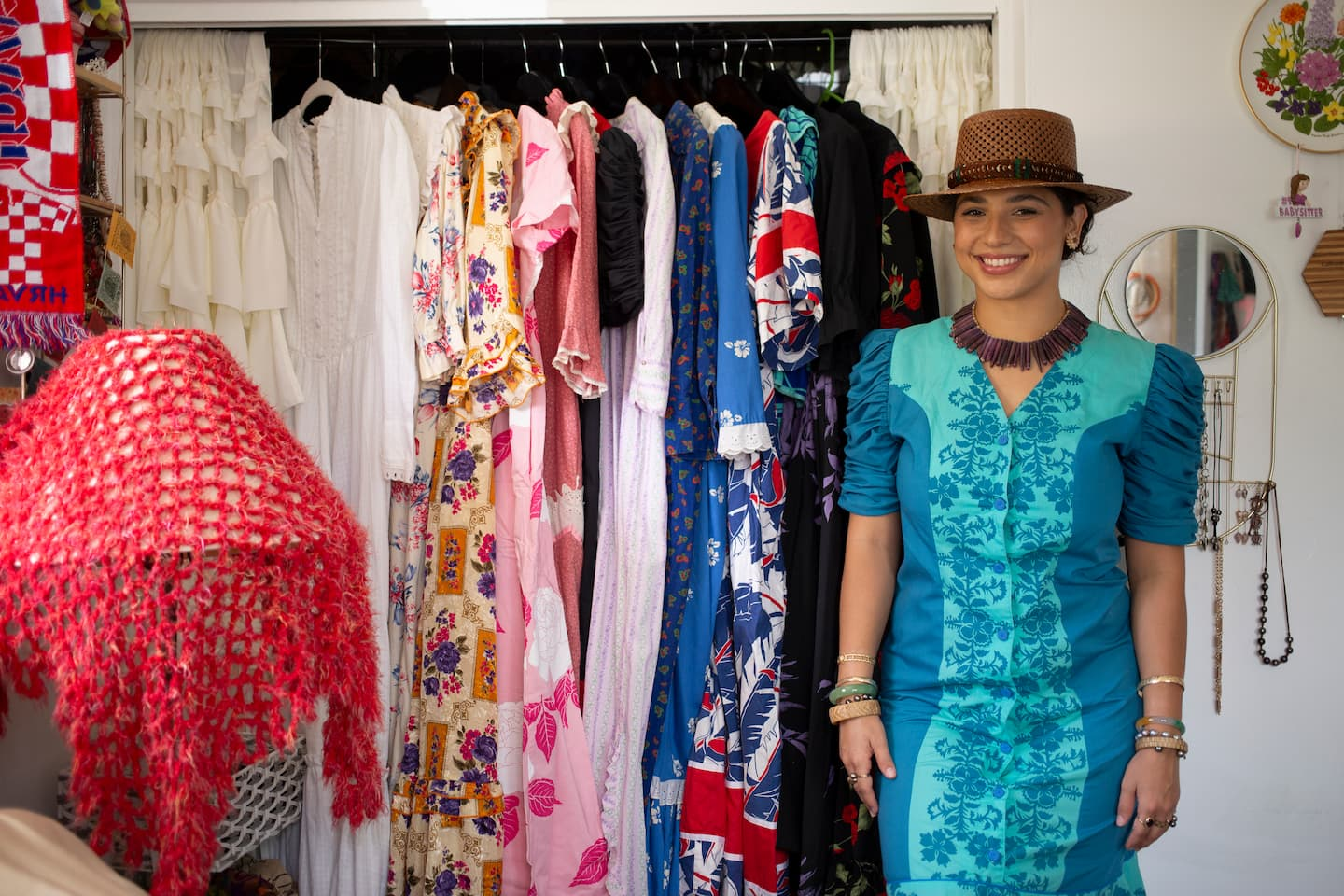
Franceska Durkin-Tang has curated a collection of Muʻumuʻu that now fills her closet in her family's five-generation home. This look is styled with a gifted Tahitian lei wana (sea urchin necklace) and a complementary pāpale (hat) woven of lauhala (pandanus leaves) and haloed by a brown and blue feathered lei hulu (feather lei). Photo Credit: Nohea Coleman, August 2, 2026.
“… and this is my lole o ka lā!” The refrain echoes throughout Hawaiʻi’s expanding social media presence as more and more young Native Hawaiians take to Instagram and TikTok to show off their #LoleOKaLā (outfit of the day) for the annual Merrie Monarch Festival: a week-long celebration of Hawaiian culture through hana noʻeau (art), mele (music), oli (chant), and hula (dance), culminating in Hawaiʻi’s most prestigious hula competition. Amid the week’s cultural expressions, the newest showstopper is Hawaiian fashion, seen in crowds of kānaka (people) gathering in Hilo. From the festival grounds to social media, the visual explosion of Hawaiian fashion underscores a booming revitalization of cultural affirmation and resilience through the simple yet ceremonial act of adorning oneself in lole aloha (aloha attire).
One of the most iconic lole aloha drapings throughout past decades has been the Muʻumuʻu. Born from floor-length, loose-fitting dresses with modest necklines and long sleeves, introduced to Hawaiʻi by Christian missionaries in the early 19th century, the Holokū was the original Hawaiian adaptation of this Western garment. As a form of resistance, Hawaiian Christian converts further adapted this silhouette to be more practical for everyday wear and Hawaiʻi’s warm climate; they shortened the sleeves, and the Holokū became the Muʻumuʻu, meaning “cut off.” Over time, the Muʻumuʻu became a symbol of Hawaiian fashion, beloved well beyond Hawaiʻi’s borders. Today, a growing community of younger Hawaiians has returned to adorning themselves in Muʻumuʻu, alongside the tutus and aunties who have passed this tradition down from generation to generation.
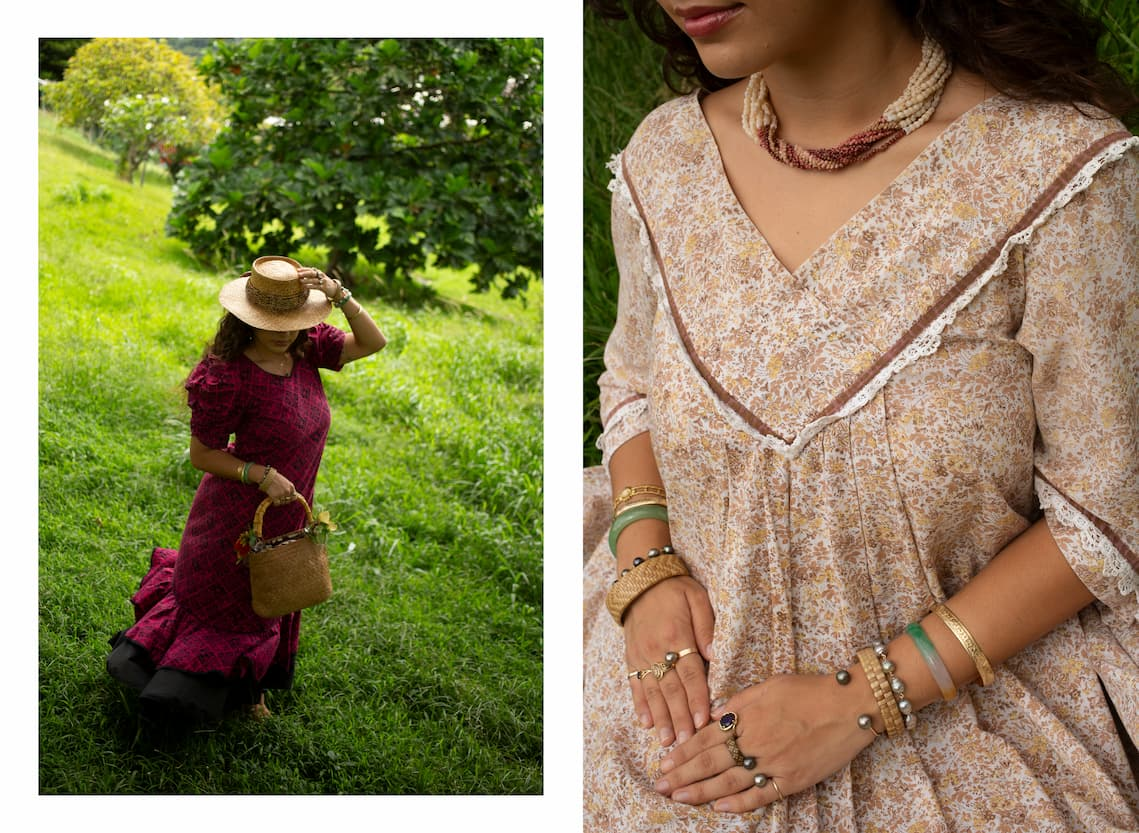
On the left, Franceska Durkin-Tang wears one of the first Muʻumuʻu she thrifted in Kona, designed by T&L Muʻumuʻu Factory. On the right, Durkin-Tang wears one of her first Betes. Photo Credit: Nohea Coleman, August 2, 2026.
In 2014, the phrase “Muʻumuʻu Month” was coined on social media by Shannon Hiramoto, a Kauaʻi designer, to honor the collection of vintage Muʻumuʻu her friend’s mother handed down to her. January became the runway to showcase lole o ka lā, and the many beautiful patterns, silhouettes, and designs found in vintage and modern Muʻumuʻu. In the eight years since, Muʻumuʻu Month has gained popularity, revealing day after day beautiful Muʻumuʻu worn by Hawaiians of all ages across the paeʻāina (Hawaiian archipelago).
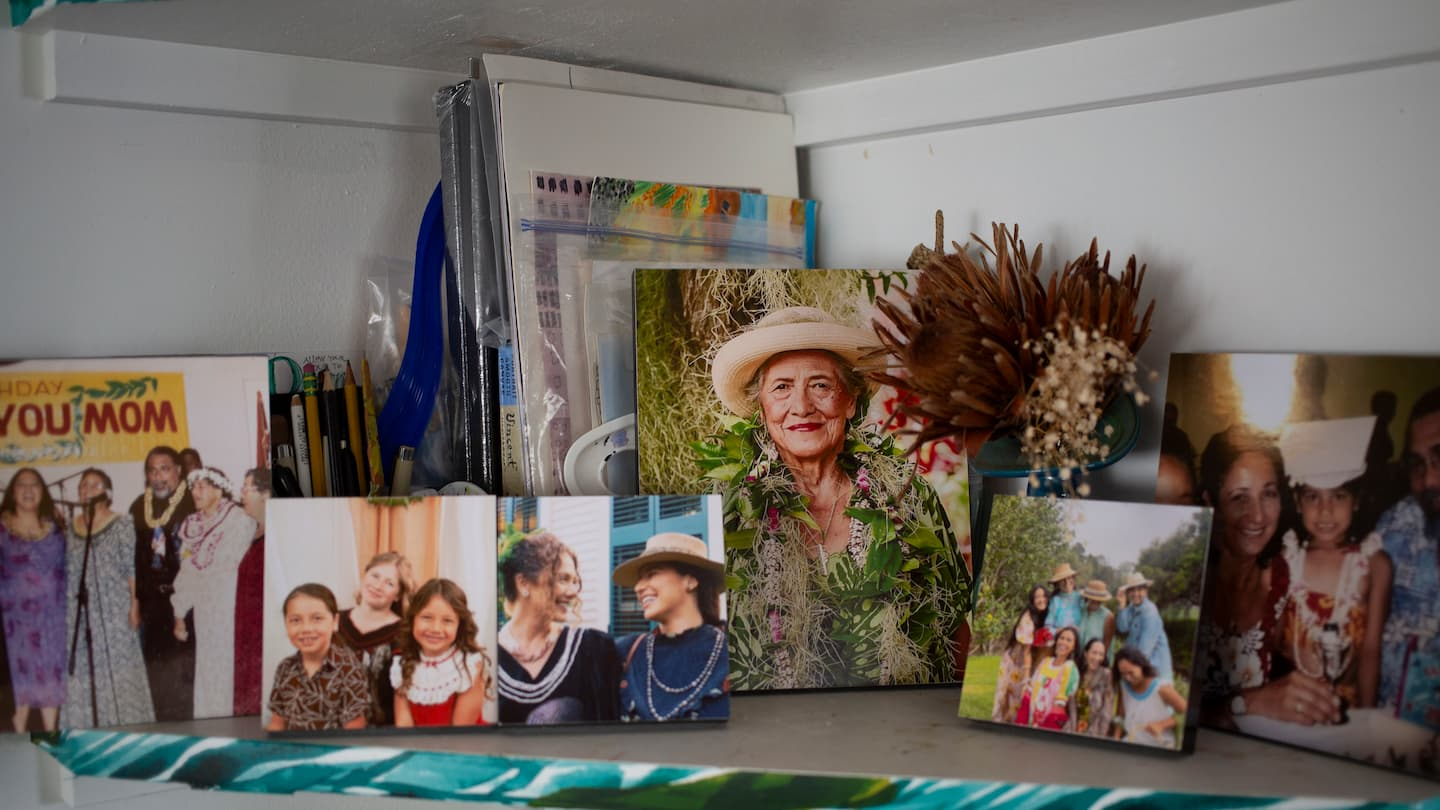
In her family's Kaimukī home, Franceska Durkin-Tang displays memories of nieces, cousins, parents, aunties, and her sister draped in Muʻumuʻu and centered by the matriarch, Durkin-Tangʻs grandma Avis-Ann Tang (Wills). Photo Credit: Nohea Coleman, August 2, 2026.
For some, the everyday practice of lole aloha adornment does not end in January. Oʻahu Kanaka ‘Ōiwi Franceska Durkin-Tang has spent the past several years wearing Muʻumuʻu as her lole o ka lā, despite never feeling drawn to lole aloha or connected to her Hawaiian culture growing up. Her mindset began to change when Durkin-Tang was confronted with the passing of her beloved grandma, who raised her and with whom she had a very close bond. “I remember my grandma dressing up for church; she was always adorned in a beautiful Muʻumuʻu alongside the other aunties. I always admired their grace, how they moved through a room, and how they treated people.”
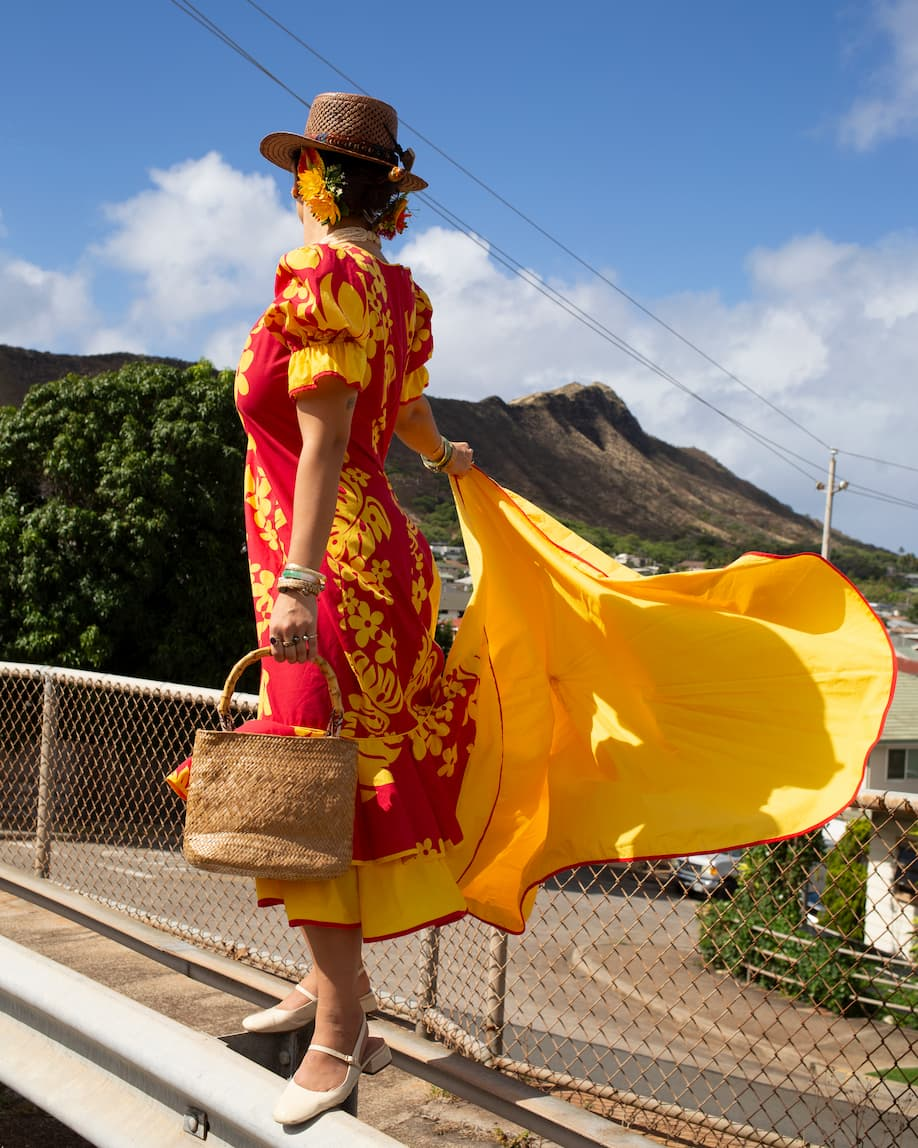
Franceska Durkin-Tang stands at the corner of her childhood street, looking out to Lēʻahi (Diamond Head), dressed in her Sunday best, like those attending the church down the road, which was founded by her great-great-grandmother, Kaʻimi Kaniaupio, from her family's home. Photo Credit: Nohea Coleman, August 2, 2026.
These memories inspired Durkin-Tang to explore wearing a Muʻumuʻu to honor and connect with her grandma and her cultural identity. “I was in this shift in my life, and I just went out to this random thrift store in Kona [on Hawaiʻi Island], and I found some muʻu, and I just felt so beautiful in it. It was a Bete, and my grandma always wore the most beautiful Betes [traditionally styled muʻumuʻus designed by Bete Inc, founded by Betty Manchester in 1959].” A vulnerable moment of yearning for connection with a lost loved one became the start of Durkin-Tang’s journey to build her own collection of vintage Muʻumuʻu.
Now, Durkin-Tang feels a great sense of cultural pride in her lole o ka lā. “I am Hawaiian. I’m not just dressing like this just to dress like this; it’s who I am. There’s something beautiful about being overtly Hawaiian and dressing overtly Hawaiian. I represent who I am as a kanaka outwardly. It’s a way of honoring our ancestors.”
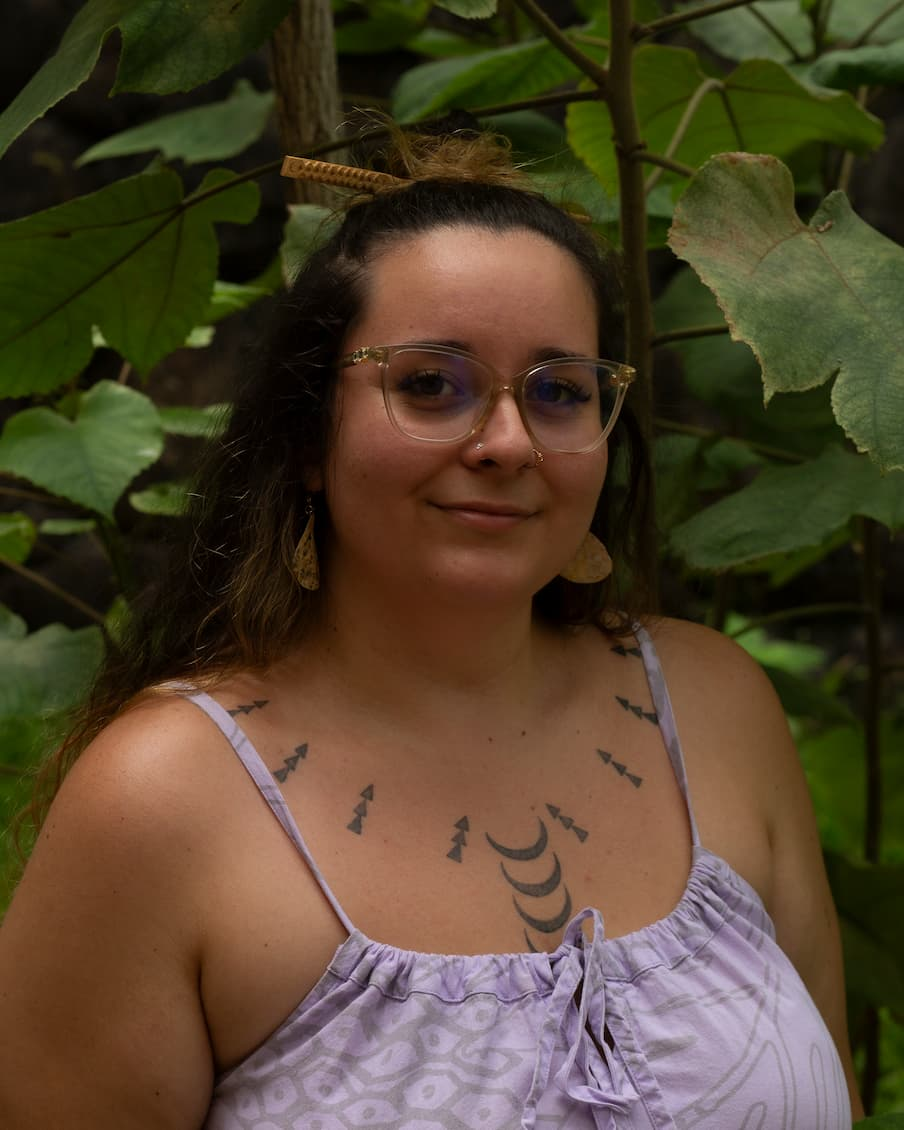
Kaʻiukapu Baker stands proudly in the māla wauke (mulberry garden), where she harvested the bark used to create the kapa fibers for her kapa holokū. Photo Credit: Nohea Coleman, August 4, 2026.
For the designers, pride in the lole lies in intentionally weaving haʻi moʻolelo (storytelling) into the garments. “There are different ways to include the moʻolelo into the garments, and that’s always going to have to do with a print, your colors, even a silhouette can tell a story just in itself,” says Kaʻiukapu Baker, an emerging costume and fashion designer and cultural practitioner. Baker was raised in the Hana Keaka (Hawaiian Theater) program and is a proud Native speaker and kaiapuni (Hawaiian language immersion) graduate.
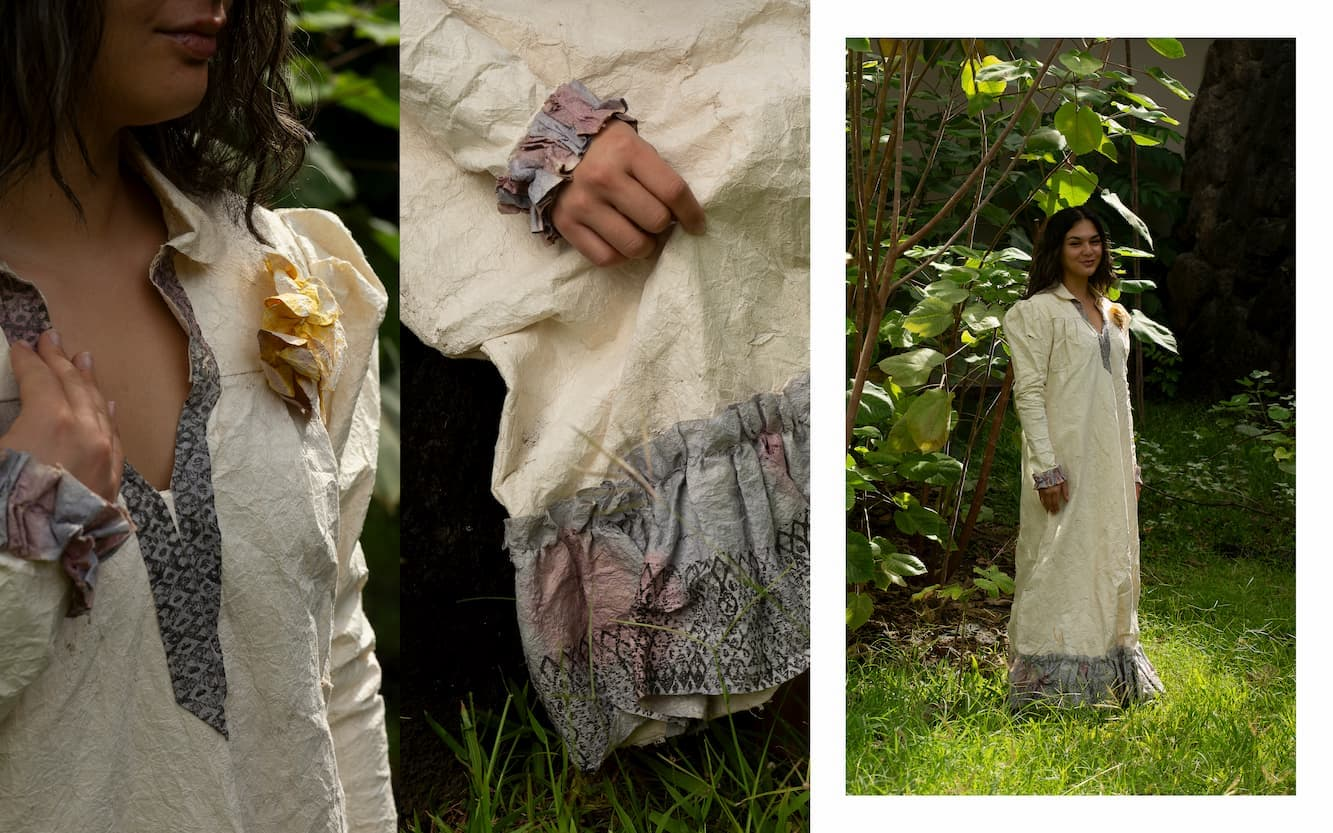
Kawehi Johnston lovingly adorns the kapa holokū designed for her by her fiancé, Kaʻiukapu Baker. This gown showcases a delicate maka ʻupena (eye of the fishnet) watermark and intricate natural detailing. Photo Credit: Nohea Coleman, August 4, 2026.
“The most influential thing in my life and my design process is my language, and being someone who can speak the language, read the language, articulate, and orally pass down the knowledge. I utilize a lot of Hawaiian scriptures to understand how our kūpunas [Elders, Ancestors] were thinking at the time they were creating, be inspired by the generations that came before me, and be my most authentic self as a Hawaiian.” Part of that authenticity also comes from a deep connection to ʻāina (land) and kūpuna. When Baker designs garments to represent a specific place, they are intentionally sewn, dyed, and printed with the moʻolelo of that ʻāina or of its people.
To begin this process of haʻi moʻolelo through her designing, Kaʻiu turns to ʻike kūpuna (ancestral knowledge) found in mele, oli, hula, and recordings of mānaleo (native speakers) found on Kaniʻāina (Voices of the Land), an educational resource for Hawaiian language preservation. Researching ʻike kupuna is critical not only to the design process, but also to the designer’s ability to stand out in Hawaiʻi’s rapidly expanding fashion landscape. “There are so many fashion brands in Hawaiʻi now that it’s kind of hard to be unique. And I think the most unique thing you can do is to just do your research super hard and then be super keen to put all the mana [divine power] and intention into the garment.”
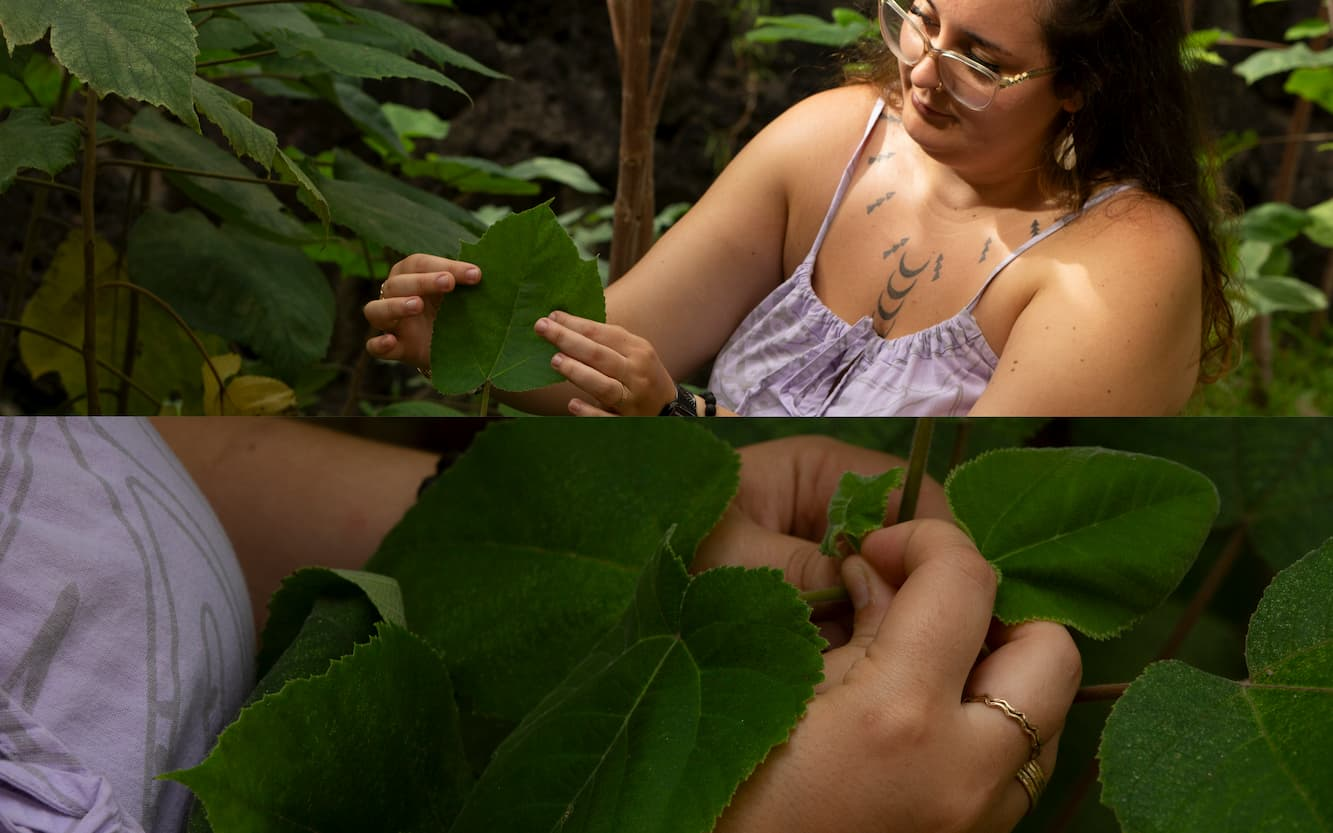
Kaʻiukapu Baker visits the wauke growing in the garden at the University of Hawaiʻi at Mānoa Center for Hawaiian Studies. Photo Credit: Nohea Coleman, August 4, 2026.
As a cultural practitioner, Baker believes that the most effective way to connect with ʻike kūpuna is to practice and perpetuate traditional practices. “With traditional textiles, it is a tedious process, but I think everybody should make something traditional in their life, and then try to do a modern take on it to see which one is more valuable to them.”
Baker had this experience herself when she endeavored to design a holokū made entirely of kapa, a traditional fiber made from wauke (mulberry) bark that is stripped, soaked for two weeks, and pounded to spread out the fibers and create the sturdy cloth. “That was probably the hardest thing I had to do in my life. It was very ambitious, but we did it, and I’m very proud of it.” The process of pounding kapa allowed Baker to share an experience with her kūpuna. “It was very special to be in a place where kūpuna would have been and be in the exact position of sitting, of being with the kapa, having your kua [base], having your iʻe kuku [pounding implement], and just jamming like that.”
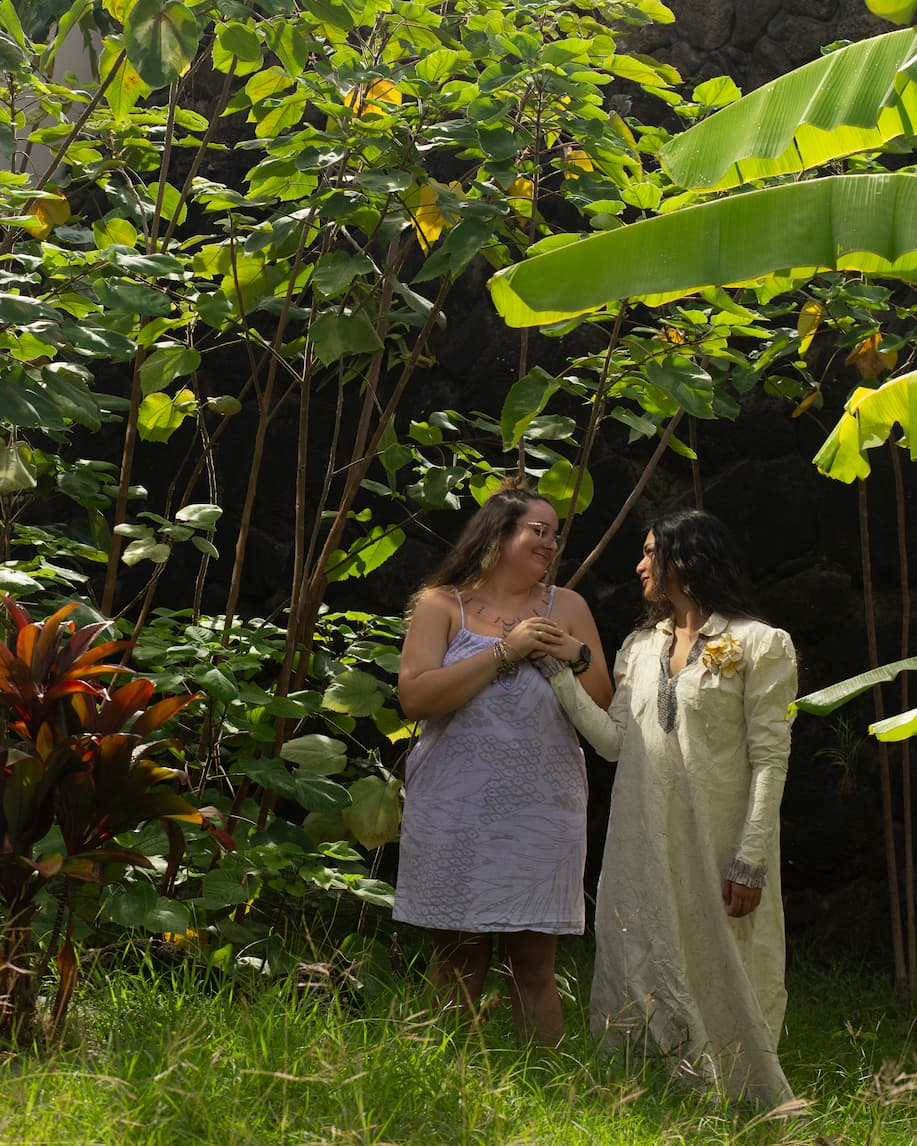
Kaʻiukapu Baker completed her kapa holokū under the guidance of her kumu (teacher and mentor), Kaliko Spencer, alongside her professor, Maile Speetjens, as part of the Advanced Hawaiian Fiber Arts program at the University of Hawaiʻi at Mānoa. She designed the garment with her then-girlfriend in mind, and since its completion in 2024, the kapa holokū has been worn only by her now-fiancé, Kawehi Johnston. Photo Credit: Nohea Coleman, August 4, 2026.
Cultural expression through adornment has influenced more young artists and wearers alike to pursue ʻike kūpuna as a way to better understand their heritage and to more authentically share the stories of our people. Though fashion in Hawaiʻi takes many forms, from modern Muʻumuʻu to kapa holokū, the underlying thread behind lole o ka lā is a desire to connect with and uplift our Indigenous traditions through the physical demonstration and embodiment of our kūpuna’s resilience.
Donate today to amplify Indigenous voices and News!
Help us in our mission to continue sharing the work of Indigenous storytellers, artists, and journalists. We are the only Indigenous created and operated independent international publication in the world that runs in both English and Spanish. The Magazine is entirely free online and print copies are free for our Indigenous communities that can’t easily access our content online.
Our work crosses borders, oceans, languages, disabilities, digital divides, and prison walls. Your donation is essential to continuing our work.
Elizabeth Nohea Coleman is a Kanaka Maoli (Native Hawaiian) photographer, multi-passionate teaching artist, entrepreneur, advocate, and storyteller. As a creative, Nohea aims to build community through intentional storytelling rooted in aloha, making art that honors people, identity, land, and kinship. She strives to uplift her kaiāulu (community), especially young ʻōiwi artists, empowering them to cultivate and share their unique creative voice with curiosity and abandon. Beyond the arts, Nohea is a lifelong learner who grounds her creative spirit in hula, aloha ʻāina, and the joy of exploration—through meaningful connections, reading, and travel.
JOIN THE FIGHT TO CRUSH COLONIALISM!
Join us in honoring and amplifying Indigenous voices. Let’s crush colonialism together, one word at a time.


 Donate