

The Magazine
Indigenous Spirituality Resilience: Decolonizing Mental Health
- By: Mark Standing Eagle Baez PhD, LSP, LCDC, CART, MS/MA
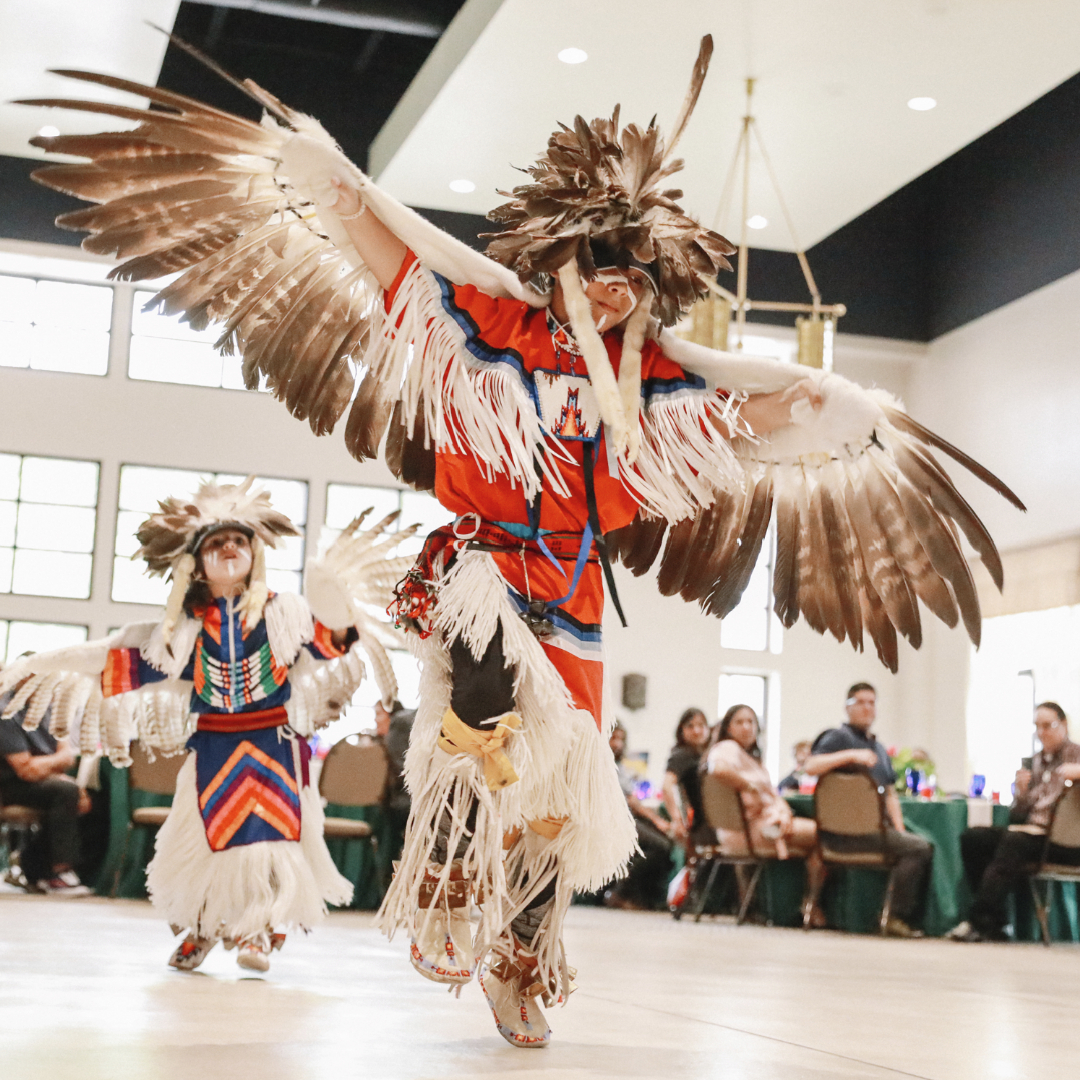
Notwithstanding significant historical trauma and ongoing systemic challenges, Indigenous people in the United States demonstrate remarkable resilience, often drawing strength from their deep connection to land, culture, community, and spiritual practices, even while reporting high rates of psychological distress due to the impacts of colonization and dispossession; this resilience is evident in their ability to maintain cultural identity, adapt to changing environments, and advocate for their communities despite adversity.
Decolonizing mental health requires being open to understanding that spiritual forces require constant and careful attention. “Decolonizing mental health” means approaching therapy by acknowledging and addressing the historical impacts of colonialism on individuals and communities, often incorporating spiritual practices from indigenous cultures to promote holistic healing rather than depending solely on Western psychological models; this encompasses actively integrating a person’s spirituality into their treatment plan when appropriate, recognizing that spirituality can be a vital source of strength and resilience for many people.
Indigenous mental health providers and healers have diverse healing traditions that have endured despite the oppression of colonization. Indigenous Spiritual resilience in the treatment of Indigenous people actively incorporates traditional spiritual beliefs and practices into the Indigenous healing process, often as a form of resistance against the assimilationist tendencies of Western healthcare systems that may disregard or devalue Indigenous cultural identity and spirituality, thereby reclaiming agency and power over their wellbeing. To incorporate spirituality into treatment for Indigenous clients, practitioners can actively learn about the client’s specific tribal traditions, consider incorporating elements like prayer, ceremonies, connection to nature, storytelling, and community support into the therapeutic process, always ensuring respect for the client’s individual beliefs and practices while acknowledging the central role spirituality plays in their healing journey.
In my language (Skẻn: nen), peace is not a concept, but a way of life —a state of harmony with oneself and others. This happens when everyone works together to benefit everyone, including those yet to come.
Decolonizing mental health and therapy is a process that challenges the legacy of colonialism, imperialism, and systemic oppression in mental health and healing. Recognizing the impact of colonization and decolonizing mental health involves acknowledging the ways that Western psychiatric knowledge has marginalized non-Western models of knowledge and healing. Prioritizing the healing of marginalized communities: Decolonizing therapy aims to prioritize the healing and autonomy of marginalized communities. Thus, decolonizing mental health is critical because it aims to address the legacy of colonialism and imperialism in psychology and mental health. Decolonization seeks to reverse colonization’s impact on minoritized groups. Decolonization reaches beyond increasing inclusivity and aims to re-establish history through the experiences and perspectives of those most affected. However, few alterations have happened in mental health and psychology, but approaches fail to target the root of the problem. To properly reverse the effects of colonization within theoretical applications, it would be necessary to re-evaluate Westernized history and teach past events through the experiences of those who suffered. Comprehensive research into decolonization is crucial for effectively eliminating colonial practices worldwide. This is particularly important for Indigenous populations, as the incorporation of Indigenous methodologies into mental health care can play a significant role in addressing mental health issues in these communities. Indigenous knowledge can create culturally centered health promotion initiatives by drawing on their cultural identity, community renewal, and self-determination. Indigenous methodologies can help address social and psychological factors that impact society, limit the influence of Western concepts, and develop socially appropriate methods. Actively dismantling coloniality within the mental health and psychology field necessitates recognizing how it forms the profession’s bedrock. We will describe historical and current psychological practices filtered through an Indigenous lens that makes evident the harm perpetuated by practitioners as a result of their training and socialization into a predominantly non-Native field.
Likewise, relationality and Indigenous knowledge systems remain largely marginalized within psychology’s dominant theoretical traditions. Mainstream psychological paradigms have historically centered psychodynamic, behavioral, cognitive-behavioral, humanistic, biological, and systems-based approaches, while Indigenous epistemologies have received comparatively little recognition within professional training and practice (Gone, 2010; Hartmann & Gone, 2014). Indigenous methodologies, including relational approaches such as visiting, storytelling, and community-centered knowledge sharing, are seldom positioned as legitimate psychological frameworks despite their longstanding role in promoting wellness and healing within Indigenous communities (Kovach, 2021; Wilson, 2008). Instead, the prevailing assumption within psychology has been that evidence-based Western interventions must be culturally modified for Indigenous populations, rather than recognizing Indigenous healing systems as established and effective practices in their own right (Gone & Kirmayer, 2020; Hartmann et al., 2019). Although culturally adapted Western interventions may produce positive outcomes for Indigenous clients, these approaches are nevertheless grounded in theories and practices developed outside Indigenous worldviews (Gone, 2013; Wendt & Gone, 2012). Consequently, the field continues to position Western psychological knowledge as the standard against which Indigenous approaches are measured, reinforcing a hierarchy in which Indigenous ways of knowing are treated as supplementary rather than foundational sources of healing and wellbeing.
Indigenous people embrace the whole person, which means honoring all aspects of the person, including their gifts, strengths, and areas of difference. The relationship between non-Native practitioners and AI/AN clients will continue to struggle if practitioners only address the negative valence of their mental health and wellness. When working with Indigenous clients, practitioners must incorporate spiritual/cultural intelligence into the initial dialogue and service plan. In that case, the struggle for a successful outcome will continue (Baez & Baez, 2023). Western models have interfered with Indigenous survival methods and the sharing of knowledge, in addition to the responsibilities to one another (Baez & Dirth, 2024). Indigenous ways of learning and knowing continue to nourish and sustain one another. Indigenous societies have long practiced Indigenous ways of knowing, incorporating culture-based and applied learning approaches that have helped the next generation understand the meaning of living in harmony with all living beings (Baez & Dirth, 2024). Meaningful and effective mental health services for Indigenous peoples require more than cultural adaptation. They require the intentional integration of Indigenous knowledge, teachings, values, and traditional healing practices into assessment, treatment, and community wellness efforts. By centering Indigenous worldviews, practitioners can better honor the lived experiences, strengths, and cultural identities of those they serve. Indigenous-centered mental health frameworks provide culturally grounded pathways for healing that emphasize balance, reciprocity, belonging, relational accountability, and holistic wellness. Such approaches help professionals deliver care that is not only culturally responsive but also reflective of Indigenous understandings of health, resilience, and well-being.
In addition, broadening awareness and appreciation of Indigenous models is essential for moving forward with culturally responsive approaches, as models can generate alternative points of emphasis, intervention trajectories, and possibilities for meaning-making in the context of disability experiences that can often be fraught (Baez & Dirth, 2024). For Indigenous people, spirituality is considered a crucial aspect of healing. When integrated into therapy through traditional ceremonies, rituals, and practices that aim to restore balance between the physical, mental, emotional, and spiritual aspects of a person, it can connect them to their community and the natural world. Appreciating that mental health is an experience that must be understood in context, so too is the meaningfulness of mental health models largely dictated within a cultural context. Towards setting a solid foundation for a Sweetgrass Method approach (below), to working with AI/AN people and their families in the context of a cultural approach to healing, the breadth of mental health models can allow for more attentiveness to the unique cultural context of clients and their families, rather than forcing them into a limited Western paradigm.
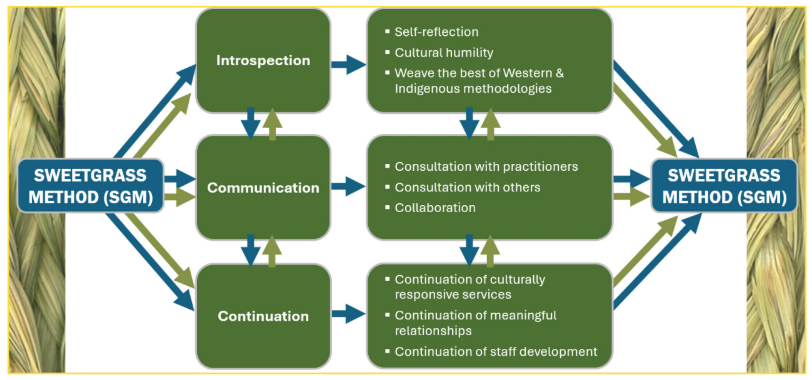
Indigenized mental health strategies foster balanced approaches to cultural responsiveness within therapeutic practice. Culturally responsive frameworks balance two systems as equals to benefit all (Lavallie et al., 2021). By implementing cultural methodologies, practitioners and instructors working with Indigenous clients can support early discussions and build cultural knowledge during the initial dialogue (Baez & Dirth, 2024). In the end, by incorporating cultural methods into the initial supports/strategies for the individual, we are more likely to see better outcomes. Understanding Indigenous peoples is essential to begin a dialogue between mental health and cultural practices for healing. This also creates an opportunity to develop culturally responsive approaches to mental health and wellness for Indigenous clients. By understanding the SGM, psychologists can establish cross-cultural ties in a mutually beneficial relationship with the client, their family, and the community (Baez & Dirth, 2024). Indigenous communities are eager to advance effective solutions for behavioral strategies. As a practitioner, I integrate Western applications and Indigenous methodologies with the client. Sacred herbs such as Tobacco, sweetgrass, Sage, and cedar have long been sacred to American Indian/Alaska Native communities. The Mohawk word ‘Oneron’ means ‘sacred or holy.’ Anything that impacts the sacred will cause other things to go out of balance. Thus, I not only share with my clients the reasons for my decision backed by evidence-based research, but I also weave in the spiritual.
Editor’s Note: This article was updated on August 14, 2026 to reflect a factual correction. The online version contains the revised information; the print edition was published before this correction was made.
Baez, M.S.E., & Dirth, T. (2024). Disability support for Indigenous people: The Sweetgrass Method. In Indigenous Disability Studies John Ward Editor (Ed), Indigenous Disability Studies (12), Routledge.
Baez, M.S.E., & Baez, C. A. (2023). Cultural-Emotional Learning among American Indian/Alaska Native Students. Journal of Indigenous Research. https://digitalcommons.usu.edu/kicjir/vol11/iss1/1/
Gaertner, S. L., & Dovidio, J. F. (2005). Understanding and Addressing Contemporary Racism: From Aversive Racism to the Common Ingroup Identity Model. Journal of Social Issues, 61(3), 615–639. https://doi-org.ezproxy.library.und.edu/10.1111/j.1540-4560.2005.00424.x
Gone, J. P. (2010). Psychotherapy and traditional healing for American Indians: Exploring the prospects for therapeutic integration. The Counseling Psychologist, 38(2), 166–235.
Gone, J. P. (2013). Redressing First Nations historical trauma: Theorizing mechanisms for Indigenous culture as mental health treatment. Transcultural Psychiatry, 50(5), 683–706.
Gone, J. P., & Kirmayer, L. J. (2020). Advancing Indigenous mental health research: Ethical, conceptual, and methodological challenges. Transcultural Psychiatry, 57(2), 235–249.
Hartmann, W. E., & Gone, J. P. (2014). American Indian historical trauma: Community perspectives from two Great Plains medicine men. American Journal of Community Psychology, 54(3–4), 274–288.
Hartmann, W. E., Wendt, D. C., Burrage, R. L., Pomerville, A., & Gone, J. P. (2019). Indigenous communities and mental health intervention research: A call for transformative research agendas. American Psychologist, 74(6), 692–702.
Kovach, M. (2021). Indigenous methodologies: Characteristics, conversations, and contexts (2nd ed.). University of Toronto Press.
LaVallie, C., & Sasakamoose, J. (2021). Promoting Indigenous cultural responsivity in addiction treatment work: the call for neurodecolonization policy and practice. Journal of ethnicity in substance abuse, 22(3), 477–499. https://doi.org/10.1080/15332640.2021.1956392
Pomerville, A., Burrage, R. L., & Gone, J. P. (2016). Empirical findings from psychotherapy research with Indigenous populations: A systematic review. Journal of Consulting and Clinical Psychology, 84(12), 1023-1038. https://doi.org/10.1037/ccp0000150.
Tuck, E., Stepetin, H., Beaulne-Stuebing, R., & Billows, J. (2023). Visiting as an Indigenous feminist practice. Gender and Education, 35(2), 144-155. https://doi.org/10.1080/09540253.2022.2078796.
Wendt, D. C., & Gone, J. P. (2012). Urban-Indigenous therapeutic communities: Enhancing intervention research among Indigenous populations. Prevention Science, 13(6), 608–617.
Wilson, S. (2008). Research is ceremony: Indigenous research methods. Fernwood Publishing.
 Donate
About the Author
Dr. Mark Standing Eagle Baez is a Coahuiltecan member, as well as a Mohawk and Pawnee Descendant. Dr. Mark Standing Eagle Baez, the president-elect of the Society of Indian Psychologists and an associate professor at Bemidji State University, is in the clinical and counseling program. Dr. Baez is a licensed psychologist with a small private practice. With over 18 years of experience in mental health and wellness and impactful research among Indigenous people across the lifespan, it has inspired significant change in the field of Indigenous mental health. Dr. Baez has advocated for cultural, strengths-based approaches to Indigenous people and hopes to change community-based approaches among AI/AN peoples by weaving culture, Traditional methods, and Western approaches to improve Indigenous well-being.