

The Magazine
Game Changers Are Changemakers
- By: Amber L. Hampton
The year was 2005. I was in high school, working nearly full-time at a roller skating rink. Reeling from the backlash of being open and exploring my identity publicly, I was forced back into the closet. I found my essential escape, a constant refuge, in stories—in books, comics, shows, and especially in games.
I’ve been a lifelong gamer. I still fondly remember locking myself away for three days during my middle school years with a borrowed PlayStation and a copy of Final Fantasy IX, fueled by nothing but sugar-infused tortillas and soda. Or the visceral fear my little brother and I shared while playing Resident Evil 2. These experiences, whether digital, role-playing, or on a board, were essential outlets—spaces where “being myself” felt safe, even when the real world wasn’t.
Despite this comfort, a deep hole persisted in my gaming experience. It wasn’t until my twenties that I finally understood what was missing: accurate representation. The characters and narratives I encountered rarely reflected my life as an Indigenous person. When Native figures did appear, they were often reduced to offensive, hollow caricatures, stripped of any modern complexity. This feeling of being unseen, of finding only hollow caricatures, wasn’t unique to me.
This feeling of being unseen is a shared experience across the Indigenous community. Studies have shown that a lack of positive representation has a direct correlation with mental health disparities. I watched as the mainstream gaming industry, particularly its “Triple-A” blockbusters, brought nuance to other marginalized communities. David Gaider, an openly gay white male, helped write complex gay characters into the Dragon Age series, fostering empathy. At Naughty Dog, leaders like Amy Hennig championed complex female and queer leads in games like Uncharted and The Last of Us. Their secret was simple: representation in leadership. So across the community, I have been witnessing other Native creators taking matters into their own hands, designing, developing, and even reviving games that showcase our unique, beautiful, and complex stories.
As Indigenous creators are answering that call, they are reclaiming their stories and becoming true changemakers by building worlds from the ground up, with authenticity as their foundation. Indigenous people are uniquely suited for this work because storytelling is deeply rooted in our culture. It is an ancient tradition that has naturally evolved to embrace modern games. Our stories teach, inspire, and hold the collective memory of our people. But for decades, the gaming and film industries have co-opted and distorted these narratives, creating harmful stereotypes that have real-world consequences. Now, Indigenous creators are dismantling those stereotypes and proving that our ancient traditions translate perfectly into modern, limitless creativity.
My first truly meaningful experience playing as a Native character was in the mid-2000s with Kisima Ingitchuna in the game Never Alone. This digital title was a collaboration between the Iñupiaq tribal community of the Cook Inlet Tribal Council and E-Line Media.
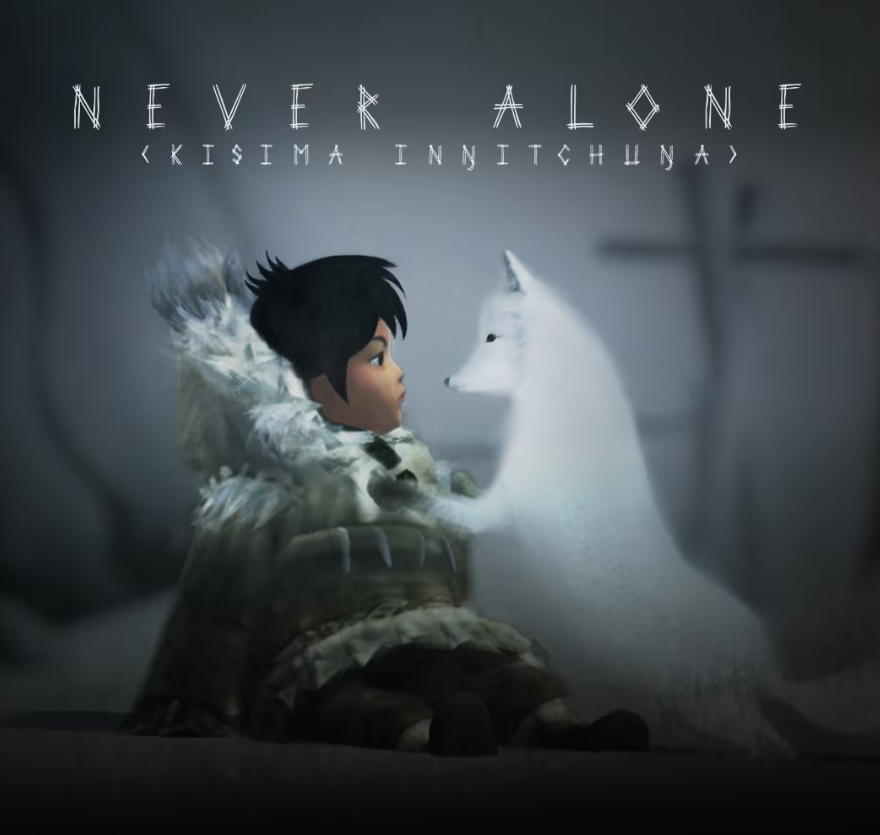
Never Alone seamlessly blends traditional storytelling with platform-style gameplay. You play as an Iñupiaq girl and her fox companion, locating owls that unlock mini-documentary videos. In these clips, elders and community members speak directly about their culture and heritage, with the narration even including the Indigenous language. It was more than a game; it was a playable cultural archive that, though not specific to my people, gave me a profound connection and a desire for more.
Never Alone is part of a rapidly growing movement:
- Elizabeth LaPensée (Anishinaabe) uses games to engage with urgent cultural issues, addressing environmental struggles or celebrating beadwork with retro aesthetics. Her work proves Native stories are complex, modern, and political.
- John Kaʻohelauliʻi (Native Hawaiian) is ensuring the traditional strategy board game Kōnane lives on. This board game, once made illegal by the U.S. coup of 1893, is now being revitalized in classrooms and cultural events, showing how games can be an act of defiance and cultural preservation.
- Angee Noel (Chickasaw, Choctaw, Mississippi Choctaw, Mexican) founded and serves as the Executive Director of Gaming is Rezilience, an organization that supports “Indigenous individuals and communities through a variety of gaming activities in both physical and virtual settings.”
A defining trend among these creators is Indigenous Futurism, a powerful artistic movement that re-envisions a world where Native people have survived or never experienced colonialism and thrive in a world of advanced technology and sovereign culture.
This vision is the root of Hill Agency: PURITYdecay, a digital 3D third-person narrative detective game from Indigenous-owned Achimostawinan Games. The premise is a stark “what if?”: What if colonizers left after destroying the land, and the Indigenous community remained to rebuild? The main character is Meeygen Hill, a Two Spirit P.I. investigating her sister’s murder after the police have failed. Rooted in Cree culture, the game brings vital and complex visibility to a community often not shown in digital games.
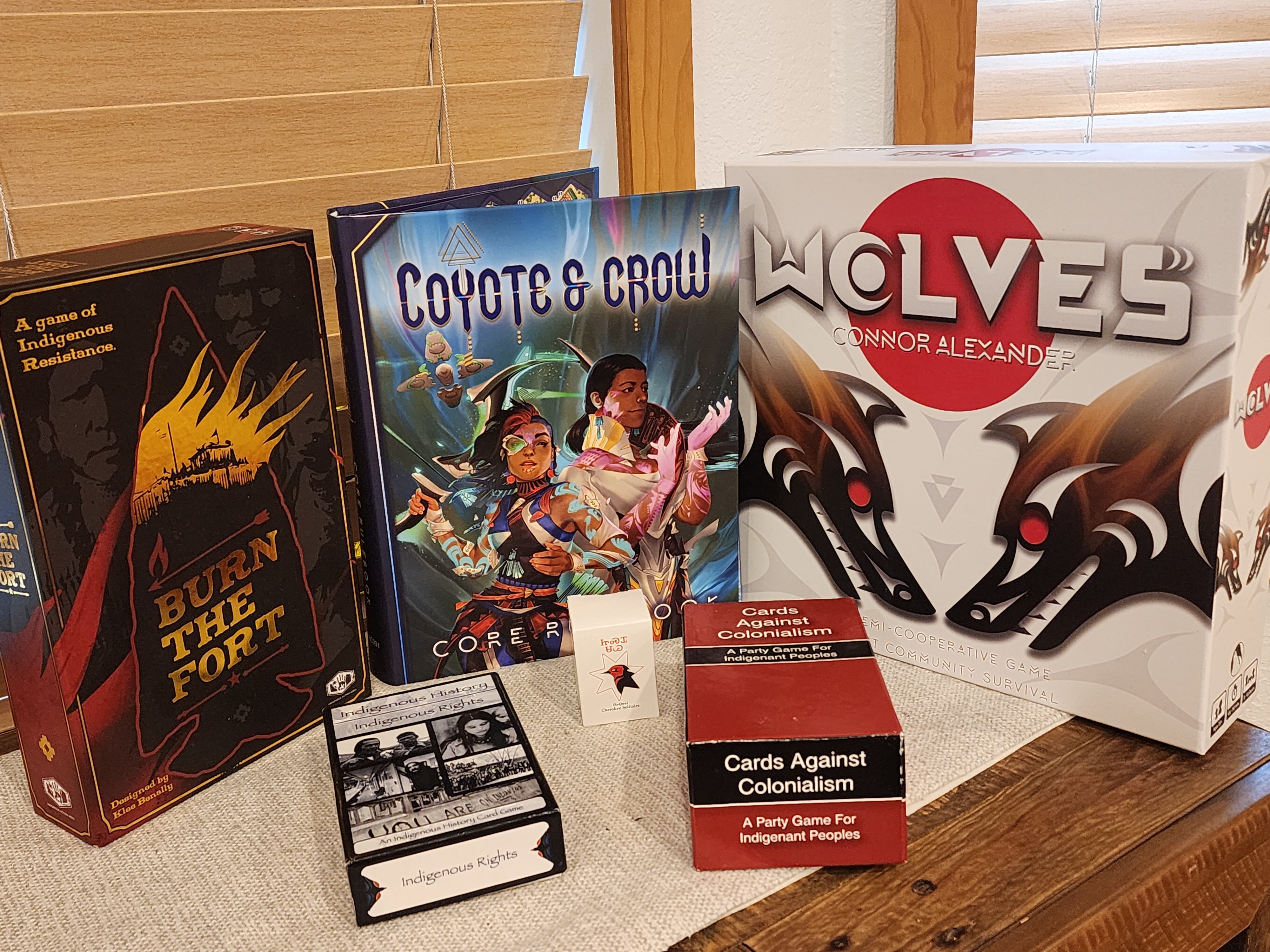
Another format in this revolution is tabletop role-playing games. In 2023, I attended the INDIGENOUS FUTURISMS FESTIVAL NORTHWEST, where I got my first glimpse of Coyote and Crow, the first-ever role-playing game founded and designed entirely by Natives. I was thrilled to play a game that matched my background in a high-concept science fiction setting.
I had the fortune of interviewing the founder, Kenna Alexander (Cherokee Nation). Tired of misappropriation, she was driven by a passion for Indigenous Futurism and a desire for a game beyond colonial influence. She partnered with Native artists and writers, including Sadekaronhes Esquivel (Kanien’kehà:ka/Mexican Indigenous) and Weyodi Oldbear (Comanche), to create a diverse Indigenous world on a fictional continent, Makasing.
Alexander has built her company around unwavering values, contracting with Native creators and selecting environmentally friendly materials. She also found that many who joined her cause were people with diverse gender and sexual identities, which only further expanded the authenticity of the diverse narratives.
Recently coming out publicly as a transgender woman, Alexander shared how this informs the game’s non-utopian, yet fundamentally affirming, world. She explained that while the game is not a “utopia” and still allows for conflict, in the city where the game centers, “there isn’t that need to repress people in any way. Regardless of gender… I feel like it boils down to class control. As minorities, we are always being pitted against each other by the ruling class as a tool, and when that is removed… You become open to not needing labels as much.” Coyote and Crow uses an in-game language to allow players to explore diverse identities without appropriating sacred Indigenous terms.
“We’re creating a world where the Indigenous experience is not defined by colonialism. It’s defined by our own limitless imaginations,” Alexander told me, highlighting the core message of the movement: we are not just characters from history; we are architects of the future.
The impact of these changemakers resonates deeply within the community. It’s a journey of realization shared by many advocates, including Angee Noel, who experienced serendipity when I met her at IndigiPopX.
Noel shared her journey through this growing movement, mirroring my own slow realization about representation. She explained that early in her gaming community involvement, she didn’t critically think about the issue, but how that changed over time through discussions and observations. “In 2022, when I began my graduate research, my focus shifted toward Indigenous representation in gaming,” she told me. “That transition helped me become more authentic and true to myself as a creator.”
She observed, “I’ve noticed a growing number of Indigenous video games being released, which is really exciting! Many Indigenous creators are also producing gaming content on platforms like Twitch, TikTok, and YouTube. It’s such a powerful way to learn about the diversity of Indigenous communities around the world. I used to think Oklahoma had a lot of tribes, but seeing how many rich cultures exist globally has been truly eye-opening and healing!”
For people who have long felt invisible or misrepresented, seeing yourself as a hero, a detective, or a character thriving in the future is a powerful act of affirmation.
These Indigenous creators are fundamentally redefining what a “game changer” means. It means authenticity over appropriation, complex narratives over harmful stereotypes, and sovereign storytelling over colonial influence. They are proving that our ancient traditions translate perfectly into modern, limitless creativity, creating spaces for healing, belonging, and having fun. This is a vital shift that ensures the future of the gaming industry will be richer, more honest, and ultimately, more reflective of the diverse, resilient world we all share. These “game changers” are really change makers, not just changing the gaming industry, but are also changing the perception of what it means to be Indigenous.
 Donate
About the Author
Amber Hampton is a gender fluid, bisexual, Two-Spirit Tsalagi, who’s a developer by day and a complete nerd by night (actually full-time). Whether it’s discussing video games, comics, food, or anything fantasy and sci-fi, conversations with Amber can go on for hours, so be warned if you ever meet. When the body is not being a dumpster fire due to heDS, Amber finds enjoyment in beading, seeing, foraging for medicine, and preparing traditional noms. Always eager for a good story, especially from elders.