

The Magazine
For Māori Filmmaker Taratoa Stappard, Colonialism Is the Real Horror
- By: Crushing Colonialism
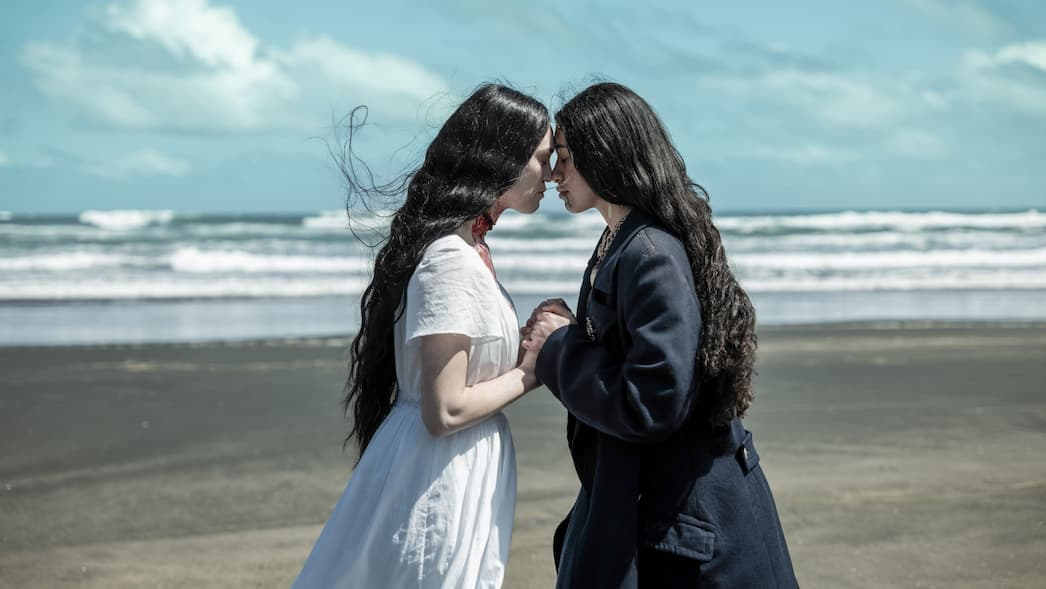
For Māori filmmaker Taratoa Stappard, making Mārama became a journey of reconnecting with his Indigenous identity and confronting the horrors of colonialism. As the film looks to the past to reckon with its legacy, Stappard reflects on reclaiming his Māori name, the cultural practices that grounded the film’s production, and the importance of telling Indigenous stories authentically and on Indigenous people’s own terms.
Now, Mārama is on the road to the Oscars after being selected as New Zealand’s official submission in the Best International Feature Film category at the 99th Academy Awards. After screening at 48 festivals across 20 countries and receiving 15 awards, the film’s international journey continues, with upcoming screenings in England, Morocco, Ireland, the Netherlands, South Africa, and New Caledonia.
For someone who hasn’t seen Mārama yet, how would you describe the film and the story you wanted to tell?
Mārama is a Māori Gothic horror set in Victorian England in 1859, and it’s about a young Māori woman named Mary, who is mysteriously summoned from Aotearoa, New Zealand, to the other side of the world: North Yorkshire. Over the next three days, what she finds out there about her own horrific colonial heritage compels her to confront a man responsible for killing her own Māori family.
Was there something in particular that drew you to this storyline? How did you first come up with the idea for the story?
Honestly, I did not grow up in New Zealand. I was born there, and at age two, I moved away with my mother and father. My father was English, and my mother is Māori and from New Zealand. Occasionally, she’d tell us stories about our ancestors, about her. It was always the stories of the Wāhine toa — the strong Māori women — that were interesting to me. One in particular was my great-grandmother, who was an identical twin. And she was quite unique in that she took a group of young Māori women from New Zealand all the way around the world, to England, to perform Māori waiata songs, in the 1910s. And it was interesting to me that my great-grandmother would do this. She traveled to the other side of the world to entertain those people who had been colonizing, and were still colonizing, her people; I just wondered what that was like. As I grew older, it came back to me, and I thought, maybe there’s a story I can tell here, because my lived experience isn’t in the Māori world, but it’s been almost like being a fish out of water. And so I thought maybe I could try to tell this story about a young orphan who is slightly divorced from her Māori identity, like I am, who travels all the way to England, and ironically, on the other side of the world, she finds out about herself.
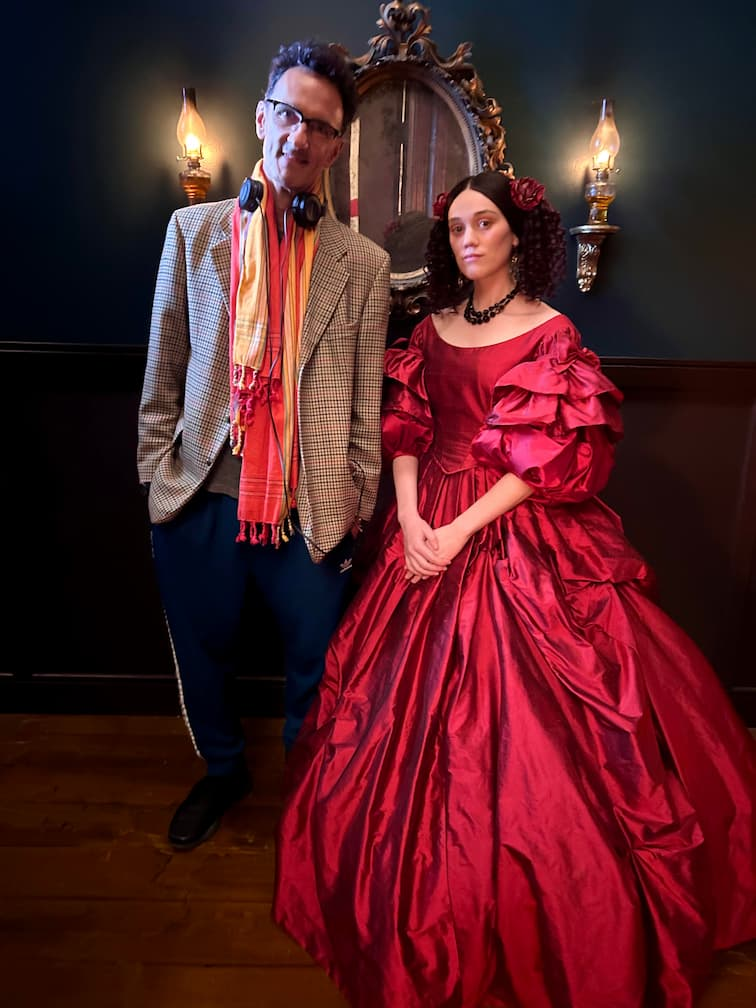
You’ve said before that horror is inherent to colonialism. Could you talk a little about that idea and why you felt horror was the right genre for this particular story?
When I first started writing the story, I was trying to think about who this character might be and what she comes to England to discover. I thought it would be a story about a young Māori woman searching for the truth about her identity. But once I started looking at the history of New Zealand’s colonization, it quickly became clear to me that it was a horror story for the colonized people. Especially if the British were involved, you got the shit end of the deal. It was horrific what happened to the Māori. Then it became clear to me: this isn’t a drama; this is a horror. The truth of that particular chapter, of that particular bit of colonization, is horrific.
How do you see horror as a way to reclaim the genre, creating space for Indigenous stories to be told on their own terms?
If I think of a story about an Indigenous tribe and they are [portrayed] as the crazy people, with the crazy customs, all that is dead now, I hope. People are far more interested in and in tune with authenticity, and that’s what I set out to achieve with Mārama. It was really important to me, and to my producers, two Māori women and one Hungarian, who had lived in New Zealand for some time. They were very, very strict on this, and said this [film] needs to be tika and pono, which means correct and truthful. Culturally correct and authentic, as in, literally, authentic. So use the right words, say it in the right way. Use the right accent, and in terms of correctness, make sure that you’re being respectful to a particular practice. So we had cultural consultants and a language specialist. He advised on the accents and how certain words were said; he handled all the translations and also advised on movement. It was absolutely essential that anything that we portrayed, that spoke to the Māori world, was authentic. There was no question.
Could you tell me about your Māori heritage and how you’ve connected with it throughout the making of this film?
The making of Mārama has absolutely been shaping my identity. There’s a whakataukī, a [Māori] saying used multiple times in the film: ka mua, ka muri, which means “walking backward into the future,” meaning understand your past to know which way you guide. I’ve been walking backward into my future by trying to find out more about my own personal history. I have been back to New Zealand a few times, and in the last 10 years, I’ve met more of my relatives and understood more about my lineage. And that’s very important within Māori culture: to be able to identify who you are. I still remember about 10 years ago, when I first went back to New Zealand to a film festival with a short film I had, a festival called Māoriland, a really great Indigenous film festival. I remember signing in and giving them my name, and a little old lady, a Māori woman next to me, saying, “What did you say her name was?” I said, “Oh, hello, Taratoa Stappard.” And then she asked, “Who do you belong to?” And I love that. It was really affecting.
Was there anything you discovered or came to understand more deeply about your own identity through making the film and reconnecting with your Māori roots?
On a very basic level, I have reclaimed my full name. Until six years ago, I was called Toa. I have been Toa almost all my life. And that was my mother’s fault. She gave me the name Taratoa, which I inherited from different ancestors. But she started calling me Toa, and everyone called me Toa growing up. Almost all my friends here in the UK still think of me as Toa, and I keep trying to tell them I’ve changed to Taratoa. Some of them laugh, and some of them are trying. But everyone in New Zealand knows me as Taratoa. It’s a very simple thing, but it’s meaningful to me. In terms of who I am, I feel lucky to have been able to research the history and also to feel a bit closer to understanding the people that preceded me. The people I belong to, right? I think it’s a pretty universal question, isn’t it? Who do I come from? Who preceded me? What makes me who I am? What were those people like? What was their life like? And then, how come I’m here now? I guess I’ve been playing with that.
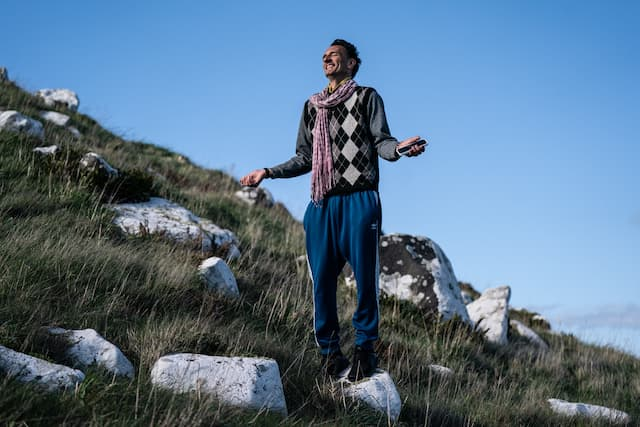
Was there a particular moment during the writing or production of the film when you felt a deeper, more tangible connection to your Māori culture? Is there a moment or detail in the film where that connection comes through?
In terms of practice, because we were in New Zealand and because we had so many Māori on the crew and in the cast, it was very natural for us to say Karakia. That’s just a way of saying prayers, a Māori opening blessing, to keep everyone who’s participating in making this very heavy story safe. It wasn’t a thing, like a rule book or anything. We just developed a practice. We would stand together, hold hands, and say a very basic Karakia, or prayer, together, to center ourselves and remind ourselves of the molding nature of the story. And we would say it in Māori together. It was a chance for us to settle and to center. I can’t remember who it was. Maybe I made it up, or came up with something simple myself, a very simple one: Ko Ranginui ki runga, to the sky, father, above; Ko Papatūānuku ki raro, to the earth mother below; Ka tau te mauri, [to] settle; Haumi e, hui e, tāiki e, gather, assemble and unite. And everyone says the word tāiki e. If you hear any Māori Karakia, or blessing, or prayer, inevitably, it will end with the man or woman who’s saying it saying Haumi e, hui e, and then everyone will gather and say tāiki e together. And that’s something that I’ve taken with me, and I say it before every meal with my family. I’ve enjoyed that.
What do you hope non-Indigenous audiences, particularly those who aren’t Māori, take away from watching Mārama?
On a very basic level, I hope it might, if they know nothing about Māori culture, open their eyes a bit and make them want to do a quick Google search. I want people to be curious about Māori culture. And possibly, as a second step, [learn] about the actual history of it, because that’s another thing that people speak about in the reviews [of the film]: “I didn’t know anything about the colonization of New Zealand. Now I do.” The more we know about these things, the more we understand the history of colonization; perhaps the more we can not repeat it.
What do you hope your film can change or make possible for Indigenous filmmakers and artists, whether in the horror genre or in the film industry more broadly?
I just hope it might open more doors. Let’s have an Indigenous heist movie. Let’s have an Indigenous cop movie. They probably exist already, but let’s have more. Why shouldn’t we allow Indigenous filmmaking to spread into those genres? Whereas this space for Indigenous genre storytelling, whether that’s comedy, whether that’s horror, whether that’s hard-boiled crime. I’m just saying, let’s have more first. Indigenous filmmakers are like any filmmakers — they like art films.
What advice would you give to filmmakers who want to tell Indigenous stories on screen in a respectful and meaningful way?
I would advise anyone, especially filmmakers who are not Indigenous and are trying to tell an Indigenous story, but even if they’re Indigenous and trying to tell a story about their own culture, to surround themselves with experts so they can draw on their advice and their support. [That way] you’re protecting yourself and your story. But also, you get so much richness out of it. You can spend months online researching stuff, but then one expert comes in and says, “No, it needs to be said like this because of this,” and you’re like, “That’s perfect.” That happened a lot in the writing of Mārama. I got a lot of that kind of advice. The main thing I’m grateful for is all the expertise I had at my disposal when I was writing the script. There’s no way I could have written the script for Mārama without all the help that I had. It was mainly Māori women, funnily enough, but I guess that was just a coincidence. But whether it was a linguist, a historian, or a woman that I met, or whether it was someone who was advising on the culture, all of those experts are the people who really help make the film happen. I’m just saying thank you to all the experts who helped me.
Watch the Mārama trailer here.
Editorial note: This interview has been edited and condensed for clarity and length.
Listen to the full interview: https://www.youtube.com/watch?v=8HtLs7CG_Lg
 Donate