

The Magazine
Autism: Between Ancestral Care and Imposed Survival
- By: Lune Feu
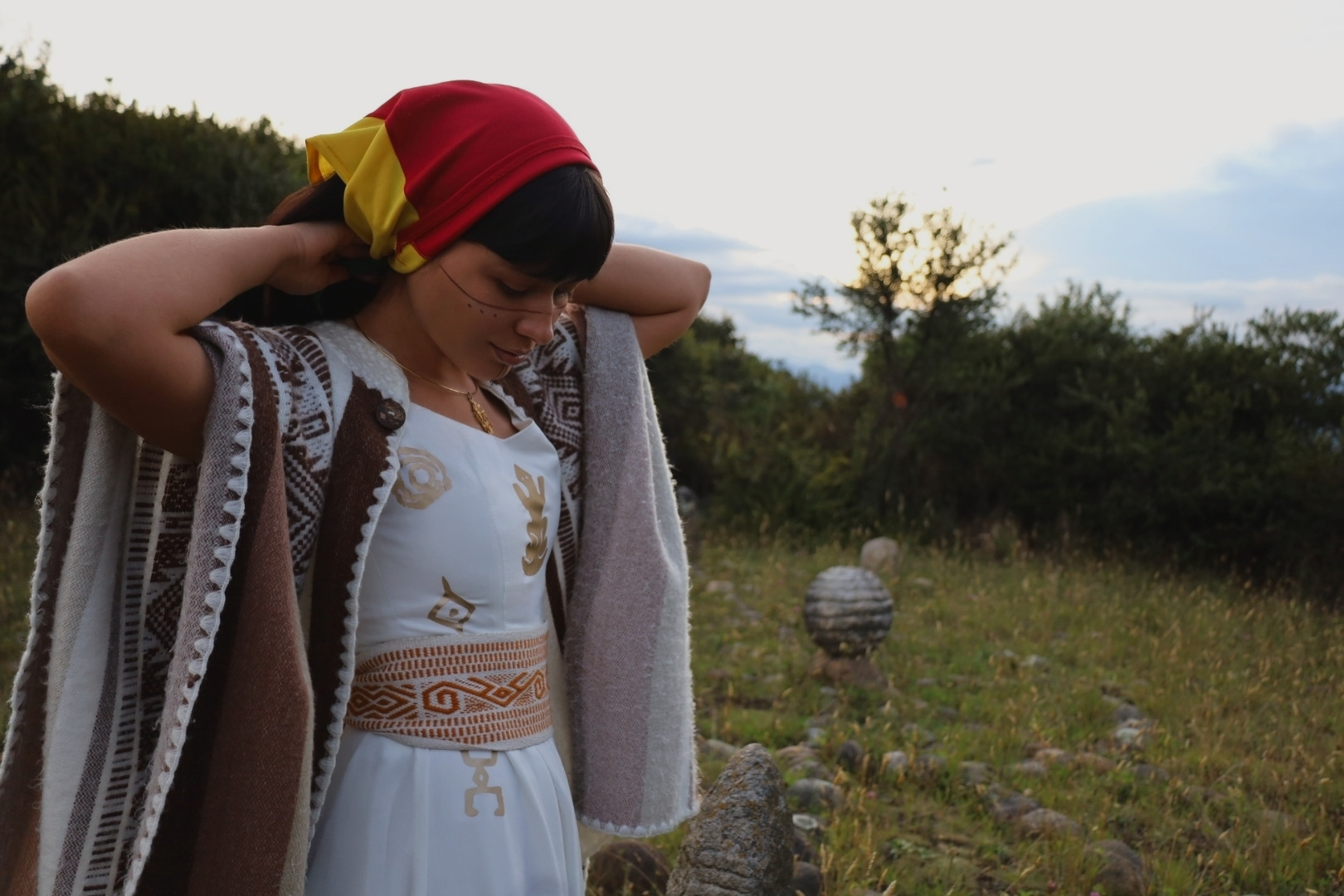
Not all minds are made to survive colonialism. Being Indigenous and neurodivergent is not a sum of vulnerabilities. It is an intersection of structural violences—on territory, knowledge, and the body. You cannot separate health from history, nor the mind from the land.
Territory: Where the Rupture Begins
The Muisca territory, located in the Andean Cundiboyacense region of “Colombia,” has been profoundly transformed; it was looted, fragmented, and reconfigured.
Our sacred hills were destroyed or absorbed by urban expansion.
Our language was forbidden for centuries.
Our systems of organization, knowledge, and care were dismantled.
This transformation was not merely a cultural loss. It was a profound reorganization of life that also altered how people related to one another. As communal structures weakened under colonialism, relationships of care became increasingly individualized, and difference became something to discipline through imposed religion.
Disability emerges where the communal fabric is torn. Not because the body stops hurting — it hurts in any system, in any territory — but because the communal structures of care collapse.
I grew up in the midst of that rupture: On the one hand, the colonial system demanded that I adapt: be efficient and functional within rigid structures.
On the other hand, our ancestral systems of care — sometimes fragmented, sometimes fragile, but still present in everyday practices — offer forms of support that colonial institutions fail to provide.
As someone who is autistic, I move through the world deliberately and at my own pace, but in a system that values speed, that way of relating becomes uncomfortable and inadequate. Conversely, in contexts where complexity is recognised, that same sensitivity can become a form of knowledge.
The Ancestral Systems of Care Have Not Disappeared
Care in contemporary Muisca processes is relational and territorial. In practice, this happens in the Cusmuy (ceremonial communal house), it’s the body reflecting the world and the territory, where each element serves a purpose, a ceremonial house built with guaiacum wood and a thatched roof. Before any gathering, harmonization happens — a spiritual cleansing to restore balance to the space. Sacred plants like hozca (tobacco snuff) and mambe (powdered coca leaf) purify and align the energies. Only then does the circle begin.
Around the fire, we listen to each other, to the silence between us, too. No one’s distress is singled out as “their problem.” The community holds it together. Because, in the Muisca understanding, nothing exists in isolation. The word “Muysca” means “people” — and everything is people: the Sie (water), the Quyca (territory). All beings deserve the same respect we give ourselves.
The Muysca cosmogony holds that every action must follow the Earth’s natural rhythms; it does not ask how much you produce. It asks: Who are you in balance with the community? With the land? With yourself? This is how neurodivergence is perceived: not by fixing what is different, but by finding where that difference belongs.
I have been in these spaces. And choosing this path was not easy. In Sugamuxi — as in many territories across “Colombia” — ancestral identity and practices are looked down upon. They are not promoted. They are not valued. Those of us born outside urban centers, or in campesino families, were taught to reject these spaces.
But for me, as an autistic person, this place — this circle around the fire — became my refuge. Not because all tensions disappear. I am still autistic, still sensitive, still exhausted from surviving the colonial world. But the meaning of those tensions shifts.
Here, “functionality” is measured in relation to collective balance. There are many ways to contribute: in Muisca tradition, seeds are cleansed spiritually and infused with gratitude through song before planting — a process that honors not only the plant but also the being who will receive it and the earth from which it comes. This is a relationship. Ritualidad Muisca does not pathologize difference; it integrates it within cycles of reciprocity and balance.
This circle gave my life meaning. It gave me a reason to stay — for the living memory and the sacrifice of revitalizing a territory that was never meant to disappear.
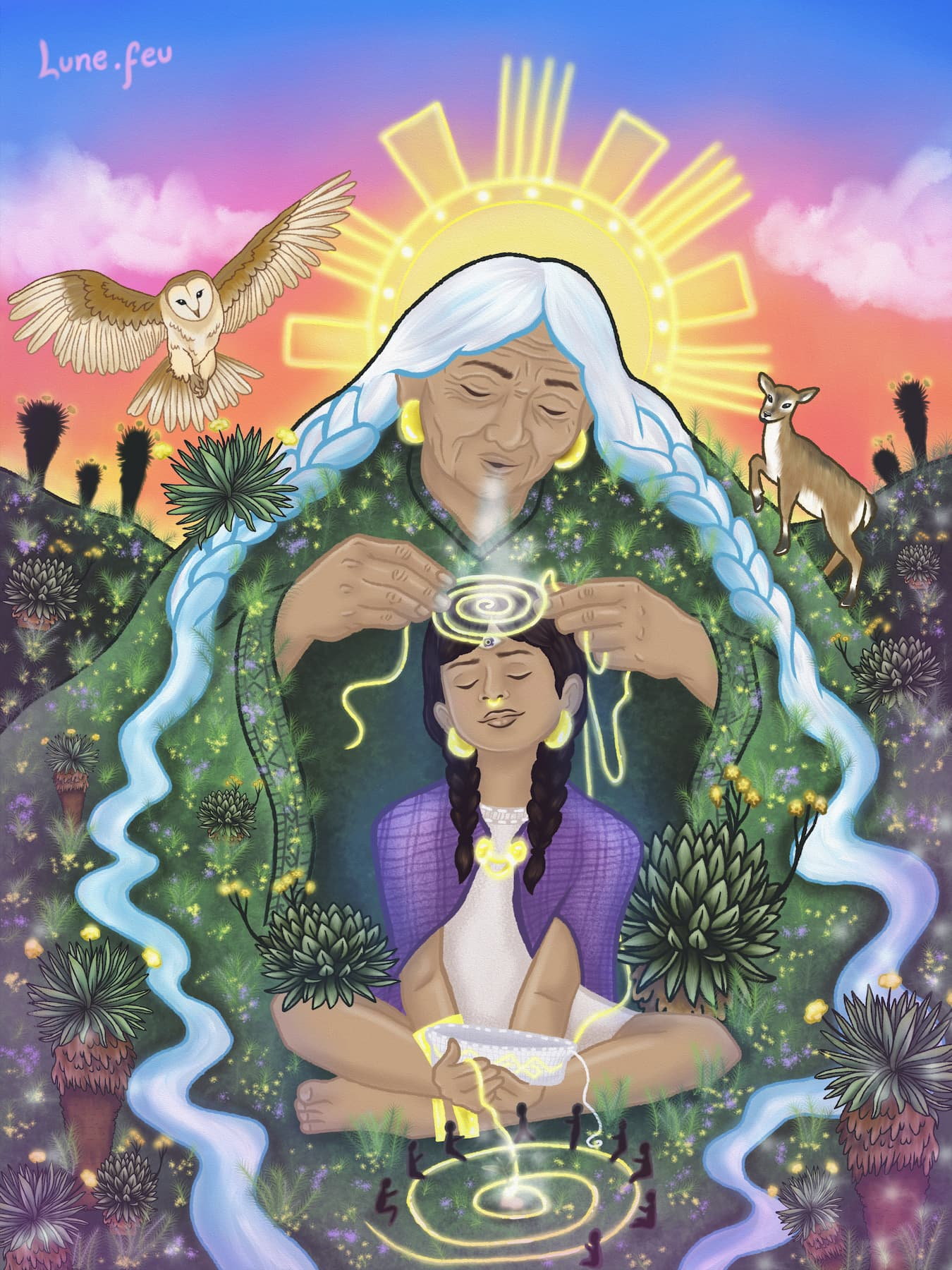
Psychiatry is a Colonial Technology When It Imposes Universal Categories
Psychiatry imposes universal categories onto unequal realities. The DSM-5 defines autism as a neurodevelopmental “disorder” through a Western framework that treats certain ways of thinking, behaving, and relating as inherently abnormal. Presented as objective, these categories often ignore the effects of coloniality, poverty, territorial dispossession, and historical violence, isolating the individual from their social and territorial context: it names symptoms, but not systems. Receiving a diagnosis often means being taught to adapt to dominant norms.
My people were colonized. So was my mind. So was my body. It is not my autism that wears on me most; it is the need to constantly adapt to a colonized world that does not recognize me.
Masking (the forced adaptation to comply with social norms) and burnout (commonly understood as a state of extreme exhaustion) are not simply facets of autism. They are a response to the excessive demands of existing in systems not designed to honor neurodiversity.
These reflect the body’s need to hide its differences to survive. It is the body learning to constantly translate itself. It is a form of colonization of behavior.
Under what conditions does neurodiversity become a problem?
The problem is not how the mind works, but for whom it must function.
Inhabiting the Contradiction
There is a constant tension: Trying to revitalize our cultures while surviving within structures that deny them.
Muyscas try to rebuild systems of care in territories marked by social and economic inequality; they have more access to our history, to our memories, than we do ourselves. Collective memory is held hostage in academia and museums. Accessing an identity and a community purpose is a collective and individual decision we make every day. We try to exist in a world that constantly pushes us to be something else—something that, for neurodivergent people, is particularly difficult to take on.
I grew up with the guilt and shame of everything I had to face just to access more opportunities. I dreamed of a university I could never reach. Society drilled into my head an idea of success that I still don’t fully understand—in my case, I would have to work twice as hard, study twice as hard as others, for what? When I was exhausted from these efforts, I thought about why I should make myself a cog in a machine that turns the rivers of my village into dumps, the mountains into mines that bleed the earth, the skies into clouds of poison. It was hard for me to imagine a future for myself while I was losing my life and my land in the process.
At the Christian school I was forced to attend, we were taught to believe there were no other ways of living, that deeply loving the land was something the “sinful Indians of the past” did. Every single day, school started with a 7 a.m. mass. They taught me to pray, to cleanse myself of sin, and to memorize books to “be someone” in life someday. But with my neurodivergent mind, I secretly hid in the bathrooms. There, I always carried my botany sketchbook. There, I drew images of my land. In the afternoons, I played traditional Andean music and took part in what the school deemed “pagan rites.” I remember once getting punished for sneaking out to the late-night Zocam ceremony at the Muisca Sun Temple in Suamuxi (a historic meeting temple for the sharing of wisdom between nations from the south and north). I was 15 and had been medicated for depression by a psychiatrist because I was not considered a suitable student.
I learned from walking through the territory—the páramos, the lakes—to recognize a web of life that fed from one being to another. While suffering through a lonely childhood, I found refuge in the spaces where we build community. And community was not just music, culture, and spirituality: community and identity are also political struggles: the defense of land, confronting neocolonialism within our families and institutions. Recognizing the heritage we carry in our blood is not romantic. Recognizing myself as native to this land is an effort that, in my neurodivergent mind, made more sense than anything else.
Revitalizing our culture is a commitment that weighs on us and costs a great deal—but we suffer it collectively. When I was diagnosed with autism at 17, something eased; I felt that many things began to make sense. I had been carrying the shame of feeling that everything was too much for me. They stopped medicating me. Still, my family wasn’t going to easily accept that a girl could have autism when she seems so “functional”—because as women, we are taught to be more accommodating. But I never felt those pressures to pretend, to overexert myself, to please others, in the community that forms around land and identity. I embraced autism and left diagnoses behind to understand that I simply have a different way—and that way makes more sense outside of systems of productivity.
In Muisca culture, life is spent weaving. Time is not linear; rather, it is woven into a great spiral. Thinking that I am connected to others and to this land relieves me of the responsibility of being an individual and falling into the void of understanding my existence as a zero point where I am born and begin to be. Instead, I understand that I am part of a history, that I carry the memories of the ancestors, from whom I can learn without having to start everything over from scratch. I am part of a land that is asking for help. My life here has a purpose: to plant for new generations and to honor those who came before. Being part of this effort to revitalize Muisca culture is hard; it is a sacrifice that is rewarded every day by the embrace of the territory and the community that accepts what, in the exploitative neocolonial system, is considered a deficiency. Here, I am part of our history.
My story and identity emerge from that contradiction. Here we say: “I am because we are.” With or without a diagnosis, we are building that world where we can all exist, divergently. We are planting seeds of hope. Today we call it revitalization; tomorrow, the medicine of memory. The medicine that saved me one day. I will plant more medicine for future divergent minds.
 Donate
About the Author
Lune is a Colombian artist, educator, and territorial defender from the Muysca land. Her work intertwines art, decolonial education, and community resistance, centering Indigenous sovereignty, environmental justice, and collective memory. Through intercultural projects across Abya Yala and the Mashriq, she builds connections between territories shaped by shared resilience for life, land, dignity, and liberation.