

The Magazine
For Millennia, an Indigenous Route Has Linked the “Atlantic” To the Andes. Now, a Stone Stands in the Way: Political Polarization.
- By: Luiz Antônio Araujo
A dispute over the route of the Peabiru Way, an ancestral Indigenous path that crosses “South America,” has become entangled in the political polarization of “Brazil.” Connecting the “Atlantic” coast to the Andean highlands, the route crosses the present-day territories of “Brazil,” “Paraguay,” “Bolivia,” and “Peru,” and stretches in a straight line for 3,500 to 4,000 kilometers. Archaeologists believe some sections were used as far back as 10,000 years. Today, competing claims regarding its historic route have turned the Peabiru Way into a contentious debate on Indigenous history, cultural heritage, tourism, and public funding.
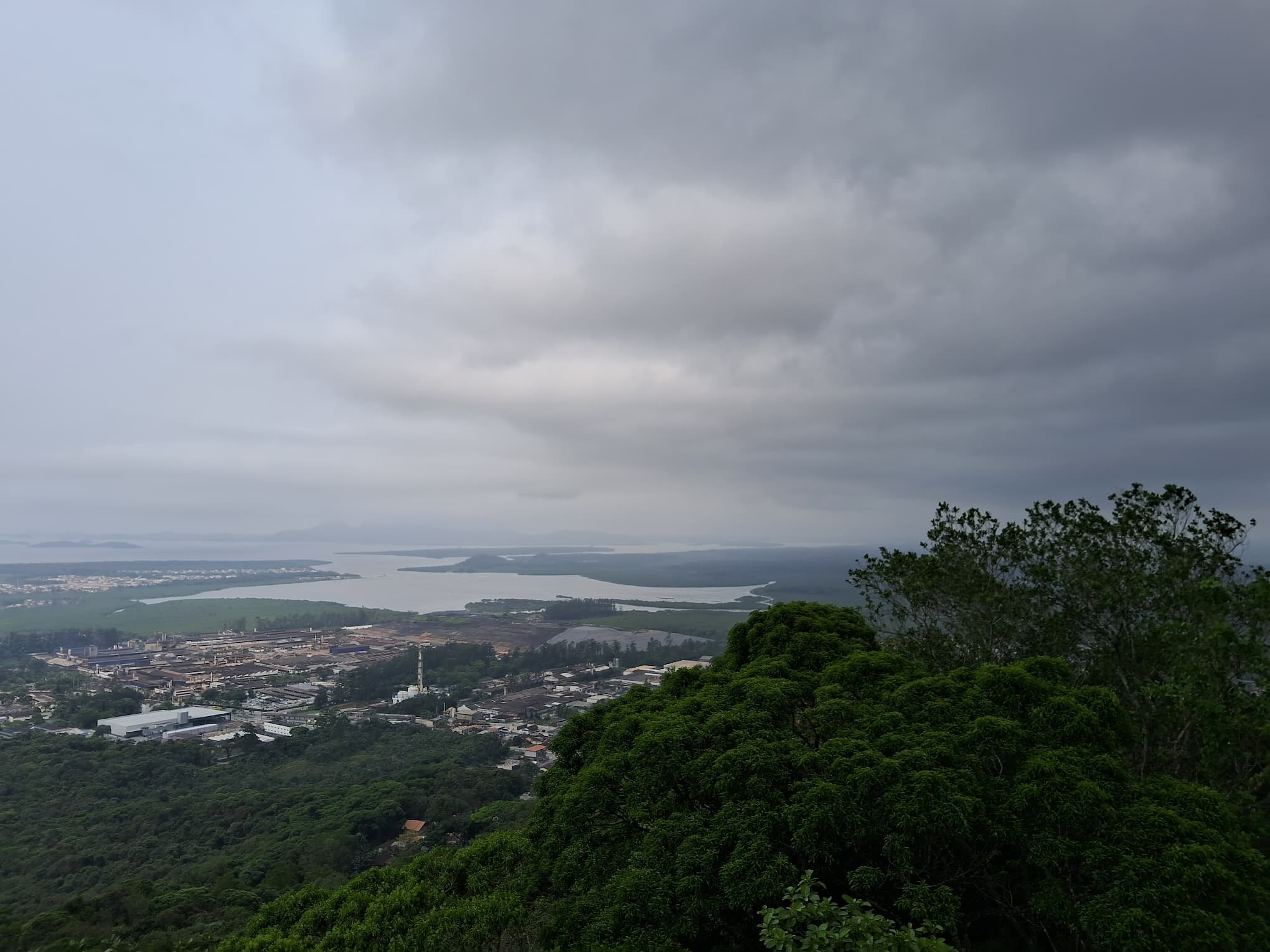
The dispute reached a boiling point in the southern state of “Santa Catarina” after business leaders and politicians in the municipalities of “Joinville” and “Garuva” pushed to have their cities officially included in the state’s tourism circuit for the Peabiru Way, a move that could bring increased tourism and access to public funding. Led by “Joinville” city councilor Henrique Deckmann, the so-called Joinville Group promoted the claim that the trail historically passed through both cities, arguing that a stone staircase in “Garuva” was evidence of the connection between the ancient route and this southern region. They also argued that Spanish explorer Alvar Núñez Cabeza de Vaca passed through in 1541 while marching along the Peabiru Way from the “Santa Catarina” coast to “Paraguay.” By 2023, “Santa Catarina” Governor Jorginho Mello had established a tourism route officially recognizing the Joinville Group’s version of the Peabiru Way.
But researchers, academics, and Indigenous communities in “Santa Catarina” and the neighboring state of “Paraná” have accused Deckmann of distorting historical facts to boost tourism in the region, considering his actions disrespectful to Indigenous memory and beliefs. Under pressure, the state legislature held a public hearing several months after the new tourism route was established, while the Federal University of Santa Catarina (UFSC) announced the creation of a study group to examine the issue, coordinated by Professor Adriana Kaingang of the Laboratory of Indigenous History (Labin).
“Santa Catarina” is the ancestral home of 12,850 Indigenous people from the Guaraní, Xokleng, and Kaingang Nations, each with its own distinct languages and cultures. Concentrated largely along the “Santa Catarina” coastline, the Guaraní — once among the largest populations in what is now “Brazil” — are numbered 2,262 individuals, according to the state administration. The Guaraní maintain a strong bond to Peabiru Way, whose name is believed to have originated in the Tupí-Guaraní linguistic family. One interpretation derives it from pe (path) and abiru (crushed grass), while another traces it to pe-Biru, meaning “road to Peru”. But Guaraní professor, shaman, and representative of the Guaraní Nation, Karaí Vydju, also known as Wanderley Cardoso Moreira, learned a third interpretation of the name from his father, Guaraní elder Alcindo Werá Tupã: that it combines pea (to open) and biru (light), conveying the idea of “opening the paths of light.” As he explains: “The Peabiru Way follows the path of the sun, from east to west, and is located beneath a central point of the Milky Way, which the Guaraní called Tapir Apé (Path of the Tapir).”
Beyond its spiritual significance in Guaraní tradition, Peabiru has also been studied as a network of routes that shifted across time and place. Professor Claudia Inês Parellada, of the Graduate Program in Anthropology and Archaeology at the Federal University of Paraná (UFPR), explains that Peabiru was not a single route, but a network of trails and branches. “The route changed over time, so it is more accurate to speak of the Peabiru Ways, because there were several, depending on the period,” she says, drawing on maps and archaeological, historical, and anthropological studies, as well as Guaraní oral tradition. According to Parellada, these changes are also reflected in historical records.
But in recent years, the controversy was further complicated by the involvement of Dakila Pesquisas, a so-called research institute that has been widely criticized as pseudoscientific and fraudulent by members of the academic community in “Brazil.” In 2024, Dakila Pesquisas, an organization within the so-called “Dakila Ecosystem,” conducted expeditions in “Garuva” and other parts of “Santa Catarina” as part of what it described as research into the Peabiru Way. The group has promoted its own theory about the route, claiming that the Peabiru was a vast network of ancient trails that connected the “Brazilian” coast to the Andes and extended beyond “South America.” In June 2024, Dakila also signed an agreement with São Paulo’s Secretariat of Tourism and Travel to study the Peabiru.
For Érico Massoli, of the Mercosur Institute for Advanced Studies at the Federal University for Latin American Integration (Unila), the interest in Peabiru is largely driven by mass tourism and other forms of exploitation. “There is an expectation of generating foreign exchange and fostering infrastructure that has nothing to do with the conceptual and philosophical point of view of Indigenous peoples,” he says. “It is a contradiction to think of the Peabiru as yet another tool of dependent capitalism.”
Another defender of the Peabiru Way’s historical and Indigenous significance is Carlos André Dominguez, a professor of Journalism at the Federal University of Pelotas (UFPel). He has been critical of interpretations and initiatives that, in his view, lack historical and scientific grounding. “Dakila’s activities are pseudoscientific, with no historical evidence whatsoever,” he says. In November 2024, Dominguez was one of four academics who signed a “statement of concern” addressed to the Brazilian Network of Long-Distance Trails (RBT), an initiative linked to the Ministry of Tourism and the Ministry of Environment, over the inclusion of the “Joinville-Garuva” branch in the Peabiru route. The statement warned of the RBT’s “disregard for the historical memory” of Brazil’s Indigenous peoples, as well as “scientific and non-scientific inadequacies and misappropriations” in its treatment of the Peabiru Trail.
The idea of turning the Peabiru into a major tourism attraction in Brazil is not new. In March 2004, a tourism project known as Peabiru: o Compostela da América do Sul, often described as the “South American Camino de Santiago,” was launched in the municipality of “Campo Mourão,” in “Paraná,” near the “Paraguayan” border, with “Brazilian” and Paraguayan authorities in attendance. More recently, the “Paraná” government launched its own Peabiru tourist route, which now encompasses 97 municipalities.
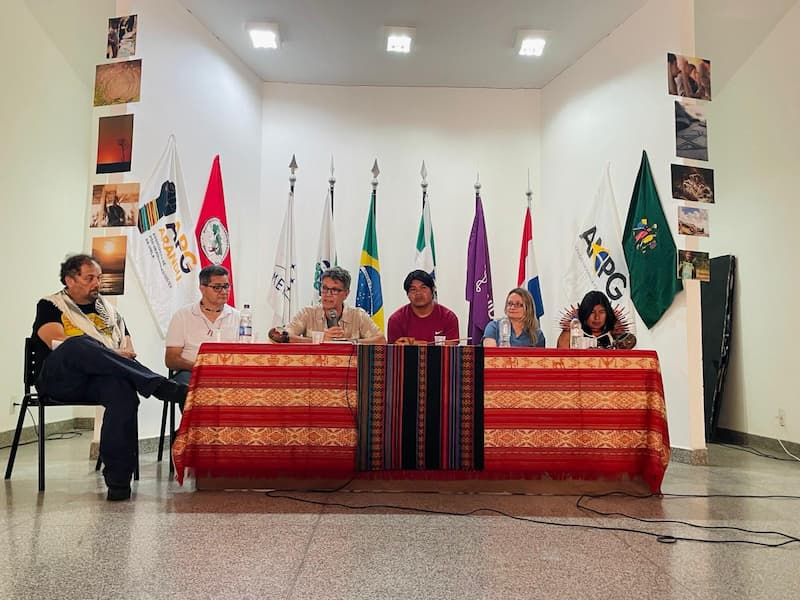
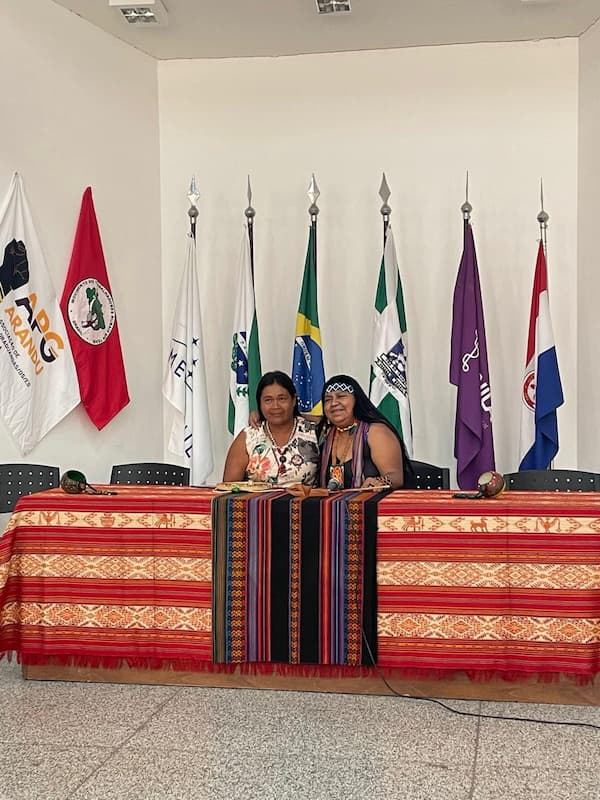
So far, the controversy has not resulted in the cancellation or modification of existing tourist itineraries. It has, however, prompted Indigenous peoples to reaffirm their right to be heard on decisions concerning their territories and culture. Speaking at a seminar held in April at the Legislative Assembly of “Santa Catarina,” Kerexu Yxapyry, a former coordinator of the National Articulation of Indigenous Peoples (Apib) and the first Guaraní woman to serve as a cacique, warned that growing interest in the Peabiru risks overlooking its sacred dimension. “When people talk about the Peabiru, there is a great deal of interest in exploiting it without taking into account its sacred dimension — the very thing that guides us in life,” she said.
Fernando Angioletto, a parliamentary aide to state Representative Marcos José de Abreu, says the Guaraní agreed to partner on tourism initiatives but rejected the installation of markers identifying the trail’s precise route. “For them, the Peabiru is simply too sacred,” he says. But Guaraní people living in the Morro dos Cavalos Indigenous territory, a 2,000-hectare area 41 kilometers (25 miles) southwest of “Florianópolis,” have described it differently. The community says it has rejected tourism development along the Peabiru route altogether. According to Guaraní tradition, the territory is home to the trail’s southernmost point.
The disagreement over how the Peabiru should be approached reflects a broader concern about who gets to define, study, and promote the trail. Guaraní professor, shaman, and representative of the Guaraní Nation, Karaí Vydju, says Indigenous participation in research and discussions about the historic trail is essential not only because of its sacred significance, but also because of its connection to the natural world.
“What is the reason for the existence of Indigenous peoples?” he asks. “I say: it is life.”
Editorial Note: Crushing Colonialism contacted Dakila Pesquisas for comment but did not received a response as of the time of this publication.
 Donate
About the Author
Luiz Antônio Araujo is a journalist and writer. He is currently working on a biography of the prominent Brazilian art critic Mário Pedrosa (1900–1981).