

The Magazine
Beading My Way Home
- By: Winona Nelson
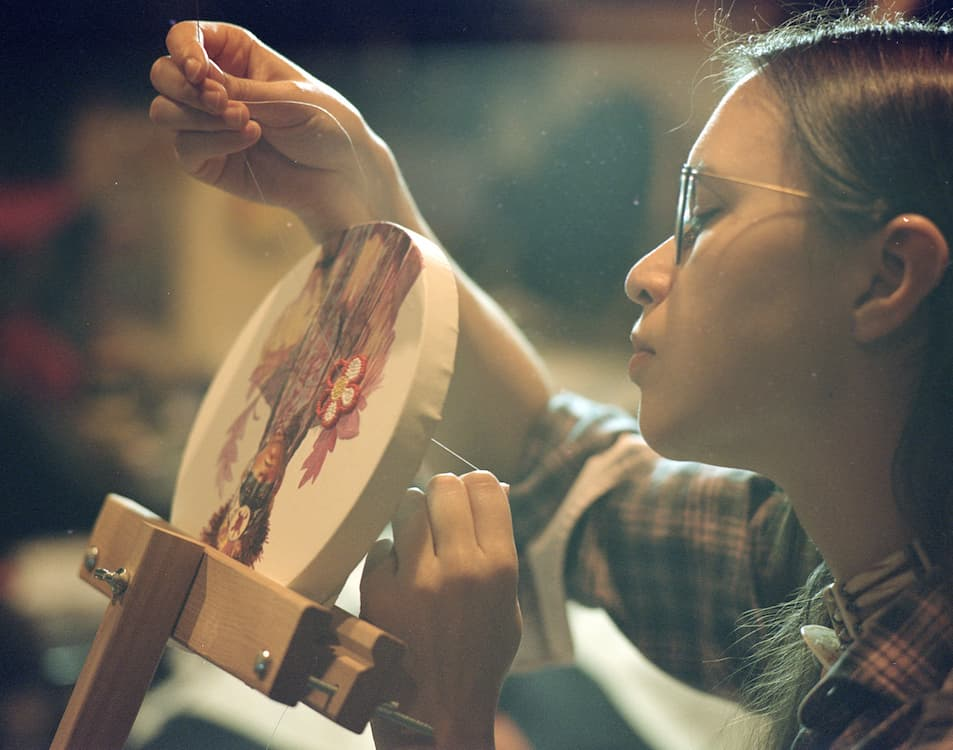
Beadwork is a longstanding artistic tradition of the Ojibwe people. Our love of style and flair goes back a long time. Before the Pale People (European colonizers) brought glass beads across the Sour Water (Atlantic Ocean), our people were already known among the Nations of Turtle Island (“North America”) for decorating garments and bags with intricate porcupine quillwork.
The Ojibwe people have long shared an alliance with our younger siblings, the Odawa and Potawatomi of the Great Lakes, which was known as the Council of Three Fires. The Potawatomi were trusted mediators who maintained relations with other tribes and had such a reputation for fairness that even tribes warring with the Potawatomi deferred to them to set the terms of their surrenders, truces, and agreements. The Odawa were the traders among the Three Fires, facilitating barter and the exchange of goods with other Indigenous Nations and peoples. We Ojibwe kept the Midewiwin—our Medicine Lodge and spiritual tradition—and spent more than six months of the year indoors, sharing stories and decorating our clothing and belongings with care and beauty.
Most Indigenous people learn to bead from their Elder family members, such as grandmothers, aunties, and other relatives. My Ojibwe family connection was broken due to my father growing up in a white foster home, so my path was a little different. I first learned to bead from Elders who taught an after-school program at Spotted Eagle Elementary School in “Duluth, Minnesota,” an all-Native school.
In that program, we learned a lot of traditional lifeways. For instance, I learned to brain-tan a hide. I was sick and missed the day we smoked our hides to bleach and soften them, so my deerskin did not turn out very usable, sadly. I loved the food-related practices like tapping maple trees and boiling down the sap to make syrup—pouring out a little into the snow to make candies—and harvesting, parching, thrashing, and winnowing wild rice.
Of all the traditional activities we did at Spotted Eagle, my favorites were birchbark basket weaving, quillwork, and, above all, beading. Quillwork and beading were winter crafts, practiced indoors during the cold months or on bad-weather days, just as our ancestors had done for centuries. The only difference was that we gathered in a cinderblock building on the school grounds instead of a wigwam.
I didn’t stay in all-Native schools. I spent 4th grade there, but I was bullied badly for being a mixed-race “city Indian” and for being a bespectacled tomboy nerd. They called me a “he-she” and a lesbian, and the old classic four-eyes. I returned to public school seeking safety and greater opportunities. I dreamed of traveling the world, and being a nerd and an artist, I wanted to learn how to create art for video games and Magic: The Gathering.
As I grew older, I spent several years away from home, working and learning how to make my way in the wider world. Eventually, I found an atelier in the old European masters’ tradition to develop a solid foundation in art skills and built a portfolio to begin a career in video game and illustration art. But for years I looked for a way to bring beadwork back into my art. I tried sewing beads through canvas, although that was too labor-intensive and hard on my hands to continue. Finally, a few years ago I realized I could combine a couple of surface preparation techniques: I could mount watercolor paper to cotton fabric using acrylic adhesive, then stretch the still-wet surface over canvas stretcher bars. Once dry, this process created a surface that held paint well and could be pierced easily with a sewing needle, while remaining strong enough to support the countless holes needed for beadwork.
Finally, I had a way to combine my multiple art traditions. I had a contract with the publisher Simon & Schuster to illustrate a picture book by Cherokee author Art Coulson, and I pitched the idea of doing the book with watercolor and beads. I sent a test patch as a proof of concept, and they loved the idea and let me take the time needed to illustrate the entire book using this technique. The book, All The Stars In The Sky, went on to win the 2026 Minnesota Book Award for Children’s Literature.
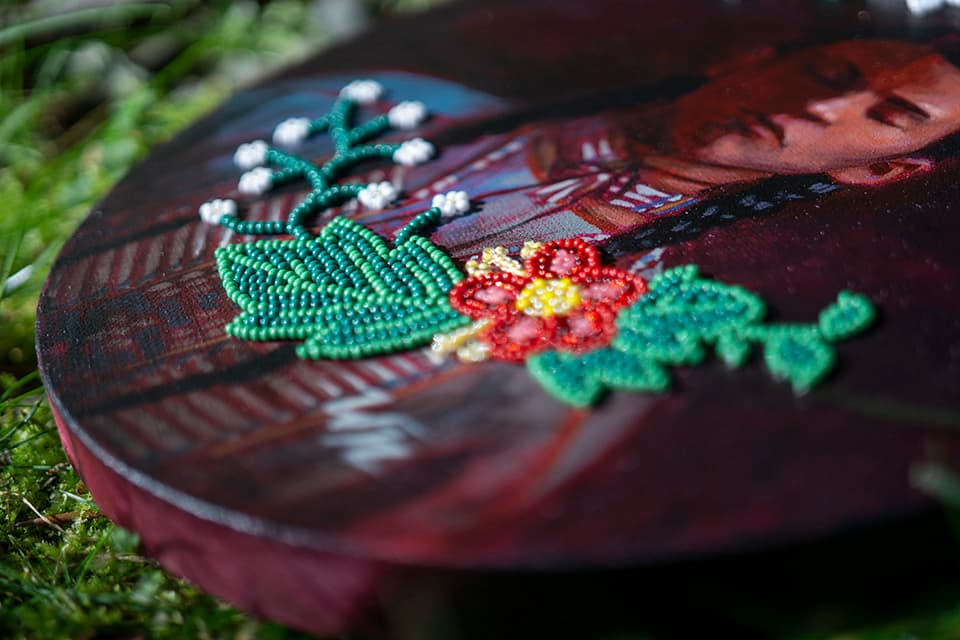
Native people, and Ojibwe people in particular, were always early adopters of new technologies when it was beneficial and fit into our lifeways. One was glass beads, which we called manidoominens—little spirit berries. We adopted rifles and home construction techniques. We were even early adopters of the internet. During the summers as a kid, I attended Computer Science Camp at Fond du Lac Tribal College, where I learned to build websites and write simple computer programs. It reminded me that our traditions have never been about standing still—they are about growing, adapting, and embracing new knowledge.
Sometimes, the old fear returns, and I hear the voices of the kids from Native school telling me I’m not Indigenous enough. But Ojibwe people have always gone bravely out into the world to find ourselves. We’ve always been flashy dressers and hilarious storytellers and patient teachers. We’ve always created beautiful regalia and trade goods. We’ve always had Two Spirit people, who bridge the worlds of gender; of waking life, dreams, and the spirit world. In all those ways, I am firmly, traditionally Ojibwe.

About the Author
Winona was born in “Superior, Wisconsin”, in 1983 and grew up in “Duluth”. She is a registered member of the Leech Lake Band of Minnesota Ojibwe. She worked on “Echo” for Marvel Studios and “The Last of Us Part II” for Naughty Dog. She also illustrates book covers and picture books for publishers including Simon and Schuster, Penguin Random House, Tor Books, Scholastic, and others. She has well over 100 Magic: The Gathering card illustrations published so far. She currently resides in “Pennsylvania” and makes it home to Ojibwe country a few times a year.